
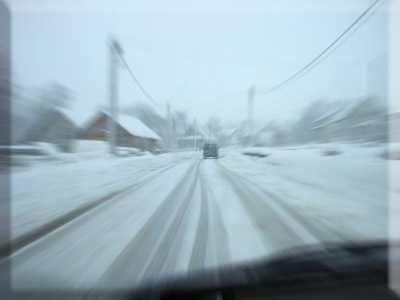
Most classic cars spend winter under a cover, which is entirely sensible. But some of us drive them anyway. Whether its a brief dry spell in January that proves too tempting, or a car that genuinely serves as daily transport year round, winter driving in a classic requires a bit more thought than just turning the key and hoping for the best. Here is what to think about before you head out.
Prepare the car before you go
A classic in winter conditions needs to be properly sorted before it leaves the garage. Modern cars have ABS, traction control, and stability systems to paper over the cracks. Your Triumph or MG has none of that, so the basics need to be right.
- Check antifreeze concentration with a tester, it should protect to at least minus fifteen degrees
- Make sure the battery is fully charged, cold weather dramatically reduces battery capacity
- Check all lights are working, visibility is reduced in winter conditions and you need to be seen
- Inspect wiper blades and top up the washer bottle with a proper winter mix, not water
- Check tyre pressures and condition, cold weather drops tyre pressure slightly and aged classic tyres can be more susceptible to the cold
- Rear wheel drive classics benefit from a couple of sandbags in the boot, the extra weight over the driven wheels makes a real difference on slippery roads
Defrost properly
Before you move, the car needs to be properly defrosted and demisted. All windows, not just the windscreen. A small clear patch in the drivers line of sight is not good enough and is technically illegal. Use a proper scraper, de-icer spray, and the heater. Do not pour hot water on frozen glass. Classic screens are often older and more stressed than modern ones, and the thermal shock can cause cracks.
Driving technique on slippery roads
Classic cars in winter reward smooth, careful driving and punish anything else fairly quickly.
Acceleration
Accelerate gently and progressively. On a rear wheel drive car, too much throttle on a slippery surface will spin the rear wheels and send the back of the car sideways before you have time to react. Build speed gradually and stay in a higher gear than you might normally use to reduce torque at the wheels.
Braking
Classic cars with drum brakes lock up more easily than modern discs, and without ABS there is nothing to save you if all four wheels stop turning. Brake early, brake gently, and give yourself far more stopping distance than you think you need. On ice, stopping distances increase by up to ten times compared to dry tarmac.
Steering and cornering
Slow down before corners, not during them. Turning and braking at the same time on a slippery surface is a recipe for an interesting experience. Keep steering inputs smooth and avoid sudden direction changes. If the rear steps out on a rear wheel drive car, steer gently into the slide and ease off the throttle. Do not brake.
What to carry
If you are going to drive a classic in winter, carry a few basics in the boot. It takes up very little space and can make the difference between an inconvenience and a genuinely difficult situation.
- Ice scraper and de-icer
- Jump leads
- Tow rope
- A warm blanket and an extra layer
- Torch
- A small folding shovel if you are going anywhere rural
- Old sacking or a piece of carpet for traction if you get stuck
- A fully charged mobile phone
Know when not to go
The most important winter driving tip is also the simplest. If the weather is bad enough that the journey is genuinely risky, leave the classic in the garage. A modern car with winter tyres and electronic stability control is a better tool for genuinely treacherous conditions. The classic will still be there when the roads clear. Most journeys can wait.
After a winter run
Salt is the enemy. If you have driven on gritted roads, wash the car as soon as practically possible, paying particular attention to the underside, wheel arches, and sills. Salt accelerates rust dramatically and a classic that regularly gets driven in winter without being washed afterwards will show it in the bodywork within a few seasons.
Winter driving in a classic is genuinely enjoyable when the conditions are right. A cold crisp morning, empty roads, and the knowledge that you are doing something slightly unusual. Just make sure the car is prepared, your technique is smooth, and you have given yourself enough time and space to deal with whatever the road throws at you. And wash it when you get home.
This page contains affiliate links. If you click a link and make a purchase, Classic Car Hub may earn a small commission at no extra cost to you.