
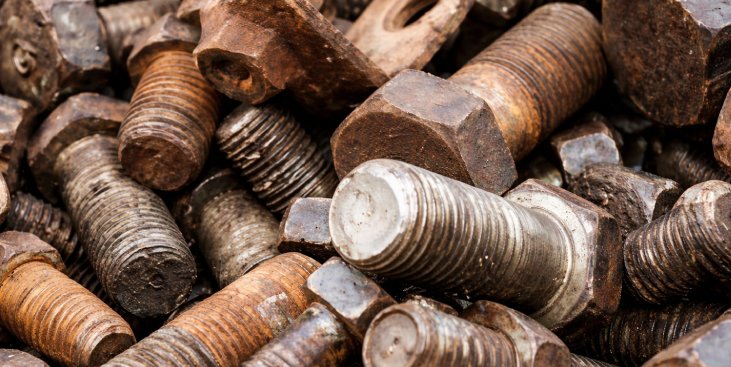
A seized nut or bolt can turn a twenty minute job into an entire afternoon of increasingly creative swearing. Every classic car owner faces this eventually, usually at the worst possible moment, usually on the most awkward bolt in the most inaccessible location. These are the methods that actually work, starting with the least destructive and working up from there.
Before you start
One of the best things you can do is think ahead. If you know a job is coming up, spray the relevant nuts and bolts with penetrating oil a good few hours in advance, overnight if possible. This gives the oil time to wick into the threads and start breaking down the rust. WD40 is the famous name but dedicated penetrating oils like Plus Gas or Plusgas Formula A are considerably more effective on seriously seized fasteners. Keep spraying as you work too, particularly on heavily corroded threads.
And when you put everything back together, use copper grease or anti-seize compound on the threads. Future you will be grateful.
Non destructive methods
Use the right spanner
If you have been using an open ended spanner and its slipping, switch to a ring spanner. Ring spanners grip all the way round the nut and give far better purchase. A longer handle also gives more leverage. If you only have a short ring spanner, slip a length of steel pipe over the handle to extend it. Apply force steadily rather than jerking.
Impact sockets
A socket set with hexagon impact sockets grips the flats of the nut rather than the corners, which is exactly what you want on a rounded or corroded fastener. Use a breaker bar rather than a ratchet for heavy resistance. Ratchets are not designed for serious torque and will let you down at exactly the wrong moment.
Impact driver
An impact driver works by combining rotation with a sharp downward blow, which can shock a seized fastener loose where steady force fails. They need reasonable access to work properly but are extremely effective when you can get one on. The sharp shock also helps break the rust bond in a way that gradual turning does not.
Heat
Heat causes metal to expand, which opens up the thread gap and breaks the grip of the rust. A blowtorch or gas welding set works best. Heat the nut itself rather than the bolt, get it to cherry red if needed, then allow it to cool slightly before attempting to turn it. The expansion and contraction cycle does much of the work. Keep penetrating oil nearby but do not spray it while the metal is still hot. Make sure there is nothing flammable nearby and keep well away from fuel lines and brake pipes.
Destructive methods
Nut splitter
If the nut is sacrificial and you just need it off, a nut splitter is clean and effective. The tool sits over the nut and a hardened blade is wound down onto it, splitting the nut without damaging the thread of the bolt underneath. Work slowly and the threads usually survive intact.
Stilsons and pipe wrenches
Where a nut has become so rounded that no spanner will grip it, stilson wrenches or pipe wrenches will. The design of these tools means they grip tighter the harder you turn them. They will damage the nut and possibly the bolt head, but at this stage that is acceptable.
Cold chisel
A cold chisel and hammer can be used to drive into the face of a nut at an angle, turning it off. It takes a bit of practice and the nut will be unusable afterwards but the thread usually survives. Wear eye protection, fragments of metal travel at speed and eyes are difficult to replace.
Stud extractor
For broken studs or bolts snapped off flush or below the surface, stud extractors drill into the broken fastener and allow it to be wound out. They work well when they work. The risk is that the extractor itself snaps, leaving a piece of extremely hard tool steel inside the hole that is almost impossible to drill out. Take your time, use cutting fluid, and do not force it.
Welding on a new nut
This is the professional approach for a completely destroyed bolt head. Weld a good nut onto the damaged one. The weld gives solid purchase and the heat from the welding process helps to loosen the seized thread at the same time. If you have access to welding equipment and know how to use it, this is often the cleanest solution.
Drilling out
The last resort. Drill through the centre of the bolt with a drill bit slightly smaller than the thread diameter. Done carefully the original thread in the casting or the panel survives and can be cleaned up with a tap. Done carelessly you end up with an oversized hole and a bigger problem than you started with. Keep the drill straight, use cutting fluid, and go slowly.
Prevention for next time
- Use copper grease or anti-seize on all threads during reassembly
- Replace any badly corroded fasteners with new stainless or zinc plated equivalents
- Apply waxoyl or cavity wax to areas where fasteners are exposed to water and road salt
- Keep a bottle of penetrating oil in the garage and use it before jobs, not during them
Seized fasteners are a fact of life with classic cars. The key is patience, the right tools, and not reaching for the angle grinder before youve tried everything else. Work through the options methodically, start gentle and escalate gradually, and most seized nuts will eventually give up the fight. Most of them.
This page contains affiliate links. If you click a link and make a purchase, Classic Car Hub may earn a small commission at no extra cost to you.