
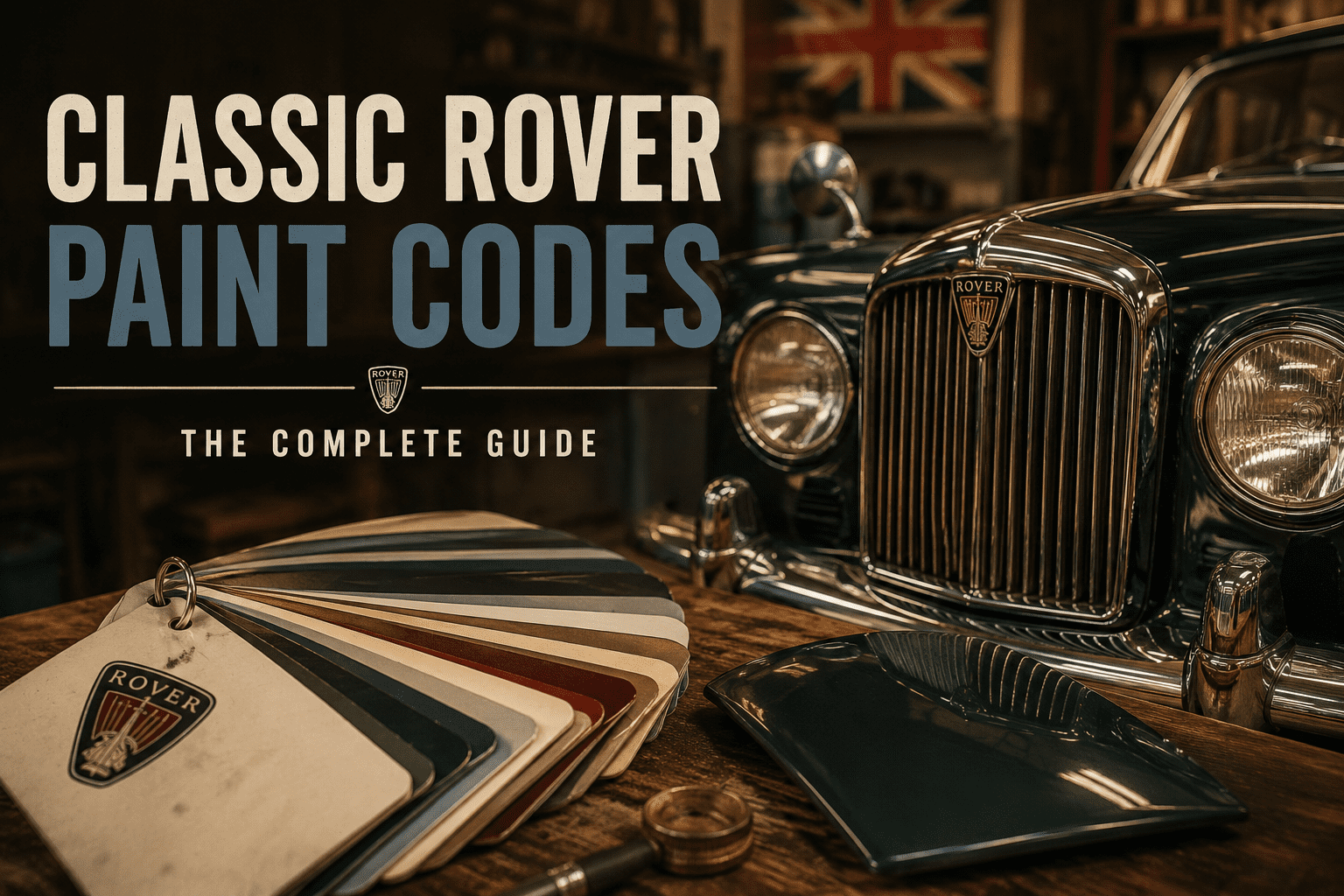
Rover spent the best part of forty years building a reputation for quietly competent engineering wrapped in conservative, occasionally brilliant styling, and then occasionally undermining that reputation with a build quality lapse just severe enough to give the tabloids something to write about. The P4, P5, P6 and SD1 covered here span the company’s most interesting period: from the upright “Auntie Rover” saloons of the 1950s, through the genuinely groundbreaking P6 (the first ever European Car of the Year, with a base-unit construction method that nobody else in Britain was using at the time), to the David Bache-designed SD1 hatchback that swapped dignity for drama and a passing resemblance to a Ferrari Daytona.
Threaded through all four models is one of British motoring’s better-known engineering anecdotes: the Rover V8. General Motors developed a lightweight 3.5 litre aluminium V8 for the Buick Special in the early 1960s, found it too expensive to manufacture at the volumes American buyers demanded, and abandoned it after a short production run. Rover’s engineers, on a visit to a GM plant, were shown the engine, recognised what it could do for their range, and negotiated to buy the tooling and the rights outright. The result powered the P5B, the P6 3500, and ultimately the SD1, and remained in Rover and Land Rover production in various enlarged forms for almost four decades after the Americans had given up on it. Few engineering acquisitions in British motoring history have aged better.
This page covers the factory paint colour codes for all four models. The coding system shifts more than once across this range: the P4 relied almost entirely on named colours with little formal coding, the P5 and early P6 used the Ault & Wiborg GL-prefix system through the 1960s, British Leyland’s BLVC numeric codes took over from 1968, and the Austin Rover three-letter codes arrived with the SD1 and the very last P6 cars. Knowing which system applies to your car’s build date is the difference between a paint factor mixing the right colour first time and several increasingly tense phone calls.
Rover P4 (1949–1964)
The car that earned Rover the affectionate (and occasionally exasperated) nickname “Auntie Rover”: upright, conservative, beautifully built, and utterly indifferent to passing fashion for fifteen years of production. The P4 ran from the 75 through to the 95, 100, 105, 110 and the famous 95/110 “Cyclops” of 1952 with its single central fog lamp. Colours through this period were named in the traditional pre-war manner: Connaught, Stratford, Embassy and similar evocative titles, applied with cellulose and resprayed by hand-mixing where an exact factory match could not be sourced. Few formal alphanumeric codes survive from this era; most P4 colour identification today relies on cross-referencing surviving build records and the Rover P4 Drivers Guild archive.
Rover P5 and P5B (1958–1973)
The P5 replaced the P4 as Rover’s senior saloon and is the car that ferried prime ministers and the occasional monarch, including Margaret Thatcher and Elizabeth II, in coupe and saloon form respectively. The P5B from 1967 fitted the ex-Buick 3.5 litre V8 that Rover acquired the tooling for after General Motors abandoned it, transforming a dignified but ponderous saloon into a genuinely quick one without altering its outward demeanour in the slightest. Colour naming became more systematic through this period, with Ault & Wiborg GL-prefix codes used through the 1960s before the BLVC numbering system was introduced from 1968 onward.
Rover P6: 2000, 2200, 3500 (1963–1977)
In 1964 the P6 became the first ever winner of the (then newly established) European Car of the Year award, recognised for its base-unit construction (a structural skeleton with bolt-on outer panels, unusual for the era and brilliant for repair economics) and de Dion rear suspension. The 3500 from 1968 carried the same Buick-derived V8 as the P5B. Colour coding follows the Ault & Wiborg GL system through the mid-1960s and transitions to BLVC numbers from 1968, with a distinct three-letter Austin Rover code system arriving on the very last cars built alongside the SD1.
Rover SD1 (1976–1986)
David Bache’s Ferrari Daytona-influenced hatchback shape was a clean break from the upright dignity of the P5 and P6, and the SD1 carried the Rover V8 into a genuinely modern executive car shape that won its own Car of the Year award in 1977. Build quality issues in the early production years did the car’s reputation no favours at the time, though running examples today are regarded considerably more fondly than they were when new. Colour coding moved to the Austin Rover three-letter system throughout production, occasionally alongside the continuing BLVC numeric references on parts documentation.
Colour codes and year ranges sourced from the Rover P4 Drivers Guild archive, the Rover P5 Club colour reference, the Rover P6 production colour list (Ruediger Wicke archive), the MG Rover Forums three-letter paint code thread, and the Rover Sports Register SD1 colour and trim database, cross-referenced against Glasurit’s Rover colour search tool. Year ranges are approximate factory catalogue dates and overlap at model transitions. Swatch colours are approximate digital representations only and will not accurately reproduce original paint. Always obtain a professional spectrophotometer match using the factory code for any respray or significant touch-up work.
Where to find your paint code
Rover kept the identification plate in a more consistent location across the model range than most British manufacturers managed, which is a small mercy given how many coding systems are involved. On the P4, the plate is typically riveted to the bulkhead or scuttle panel under the bonnet, though surviving plates on the earliest cars are sometimes missing or illegible after seventy-plus years, in which case the Rover P4 Drivers Guild holds chassis records that can help establish the original specification from the chassis number alone.
On the P5 and P5B, check the passenger door sill first; a secondary plate on the bulkhead in the engine bay sometimes duplicates the information and is worth checking if the sill plate has corroded. The P6 follows the same pattern: passenger sill primarily, bulkhead as a backup. Both will show the colour code alongside the trim code and the build date, which is useful for confirming whether a GL-prefix or BLVC code applies before you go looking for either.
On the SD1, the identification plate moved to the front of the engine bay, usually on the slam panel or the inner wing, and uses the three-letter Austin Rover code exclusively. The SD1’s commission number, also on this plate, is worth noting before any restoration work begins: the Rover Sports Register can cross-reference it against build records to confirm the original specification, which matters more than usual on a model where many surviving cars have been resprayed at some point in the last four decades and not always faithfully.
Sourcing paint
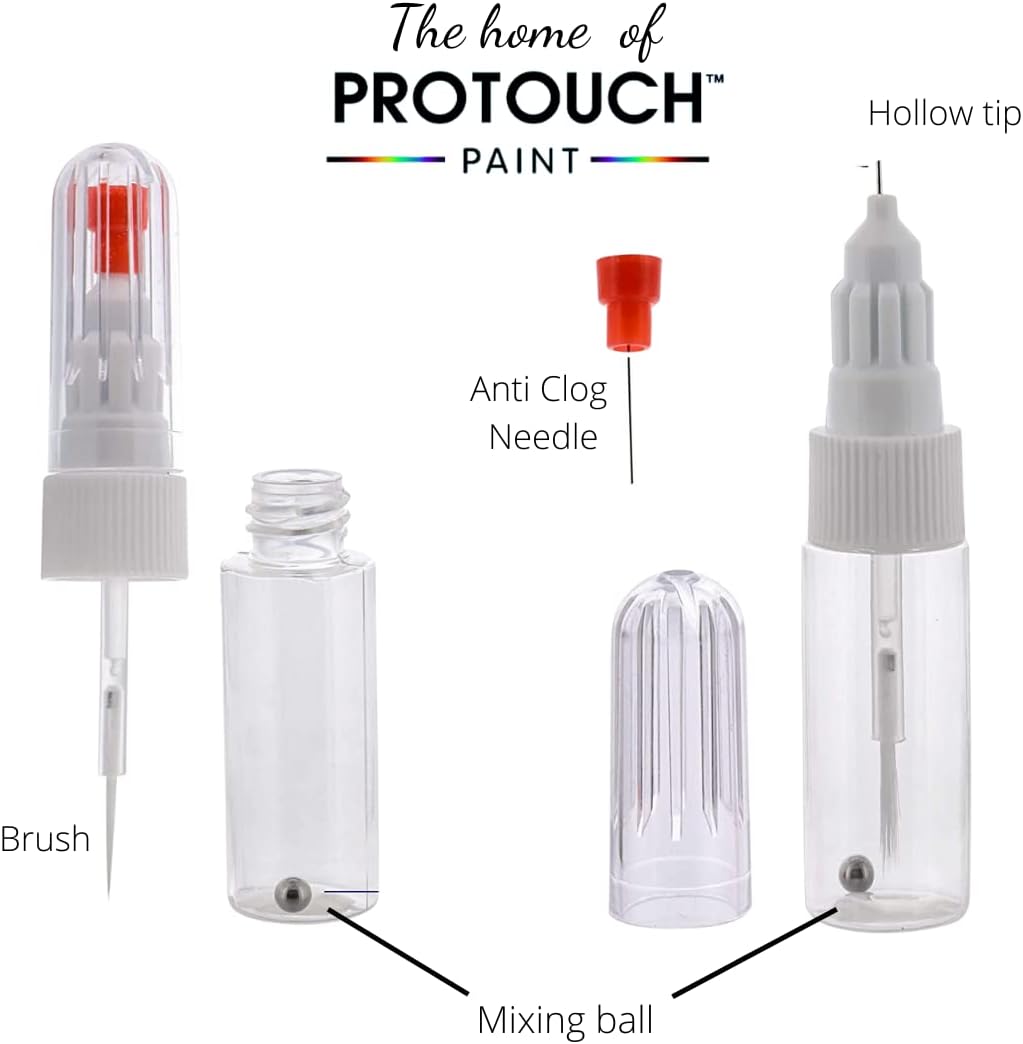
Glasurit maintains a manufacturer colour search specifically covering Rover, and their database is widely regarded within the owners club community as the most reliable cross-reference for confirming a name against a code, particularly for the GL-prefix colours from the 1960s where record-keeping was less standardised than it became under British Leyland. For touch-up and aerosol paint, Martin Brown Paints and Autopaints Brighton both hold comprehensive Rover Group references and can mix to any of the codes above. The Rover P4 Drivers Guild, the Rover P5 Club, and the Rover Sports Register (covering P6 and SD1) all maintain their own colour documentation independently, compiled over decades from club members’ surviving build records, and cross-referencing your code against more than one source is sensible given how many transcription errors have crept into online colour databases over the years.
A specific warning worth flagging: Brooklands Green appears under at least two different code references depending on the source (BLVC 169 and the database name “Shannow Green” both refer to the same solid colour, while a separate metallic Brooklands Green exists under a different code entirely and is notably brighter). This kind of duplicate naming is common enough across the Rover range that confirming a match visually against a known original panel, rather than trusting a single database entry, is worth the extra step before committing to a full respray.
For related reading: our paintwork restoration and repair guide covers paint correction and colour matching technique, our classic Land Rover buyers guide covers the closely related marque that shares Rover’s engineering heritage and, eventually, its V8, and our Triumph paint codes page covers the BLVC-era colours that overlap significantly with the Rover range above, since both marques drew from the same British Leyland palette throughout the 1970s.
This page contains affiliate links. If you click a link and make a purchase, Classic Car Hub may earn a small commission at no extra cost to you.