
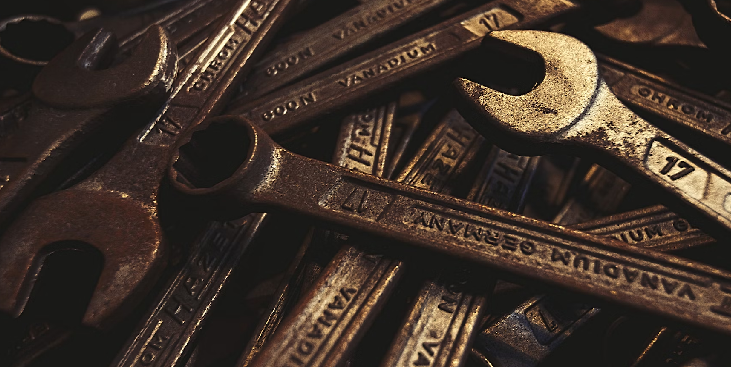
Every classic car owner has a box of rusty bits somewhere. Old brackets, carburettor bodies, brake back plates, engine components pulled off during a restoration and put aside for cleaning up later. Wire brushing and elbow grease will shift surface rust but for heavily corroded parts there is a better way. Electrolysis removes rust thoroughly, gets into areas a brush cannot reach, and converts even serious corrosion back to clean metal. The equipment costs almost nothing and the results are genuinely impressive.
How electrolysis works
The process uses a low voltage electrical current passed through a water and washing soda solution to convert iron oxide back into iron. The rusty part is connected to the negative terminal of a battery charger and acts as the cathode. Steel plates connected to the positive terminal act as the anode. When the current flows, rust migrates from the part toward the anode plates, leaving the part clean. What remains on the surface is a layer of black oxide which wipes or brushes off easily, often revealing metal in surprisingly good condition underneath.
What you need
- A plastic container large enough to submerge your part. A plastic storage box works well for most components
- Four pieces of mild steel plate cut to fit inside the container walls. Old steel sheet from a scrap yard is fine
- A battery charger. A basic trickle charger is sufficient for small parts, a higher output charger speeds up larger jobs
- Wire and crocodile clips for connections
- Washing soda crystals. Not baking soda, not caustic soda. Washing soda, available from most supermarkets
- Water
- A stiff nylon brush or wire brush for the final cleanup
Do not use stainless steel for the anode plates. The process produces toxic chromium compounds with stainless steel that are harmful and illegal to dispose of down the drain. Mild steel only.
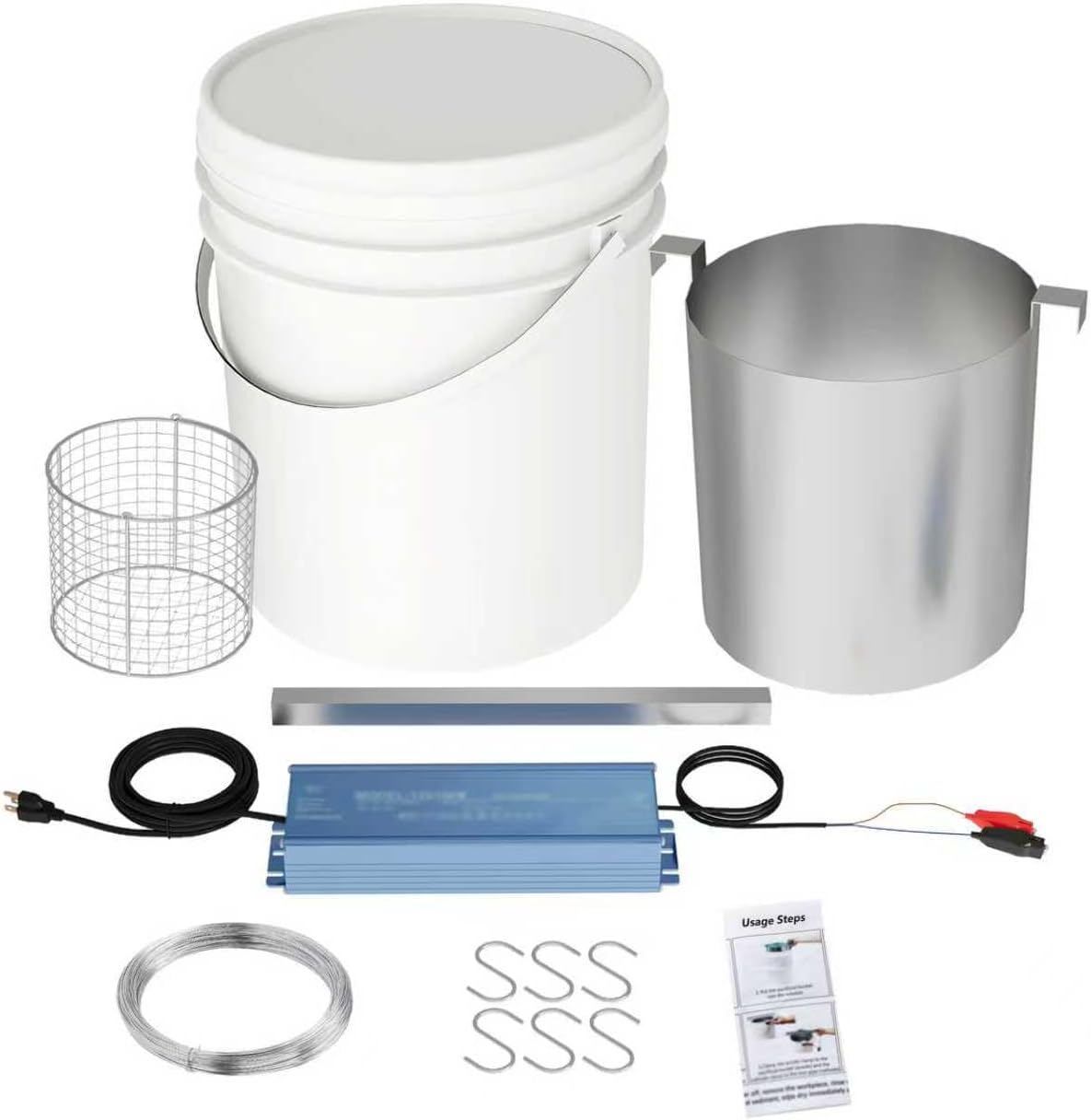
Gentle Rust Removal: Electrolysis kit for metal only removes the rust layer without damaging the metal surface, protecting the metal integrity and extending the life of the tool
Setting it up
Arrange the steel plates around the inside walls of the container and connect them all together with wire, making sure you have a good electrical connection between each plate. Connect this assembly to the positive terminal of the battery charger.
Mix a solution of washing soda and water in the container. Half a cup of washing soda crystals to every twenty litres of water is about right. Adding more crystals does not speed up the process and will overload the charger. Stir until dissolved.
Place your rusty part in the centre of the container, making sure it does not touch the anode plates. Connect it to the negative terminal of the charger. If the part is heavily painted or has a non-conductive coating, clean a small area with a wire brush first to ensure a good electrical connection.
Running the process
Turn on the charger. Within a few minutes you should see bubbling on the surface of the rusty part. This is hydrogen and oxygen being produced by the electrolysis process. The solution will begin to turn brown as rust migrates away from the part.
Leave it running for several hours. Larger or more heavily corroded parts may need overnight. You can check progress by turning off the charger, removing the part carefully, and inspecting it. Rinse it with water and give it a light scrub to see how the rust removal is progressing. If more time is needed, return it to the tank.
When finished, remove the part, scrub off the black oxide with a wire or nylon brush under running water, and dry it immediately and thoroughly. Bare metal after electrolysis will flash rust very quickly if left wet. Apply a rust inhibitor, primer, or oil straight away.
Safety
- The process produces hydrogen gas which is flammable and explosive. Work outside or in a very well ventilated area. Keep all sources of ignition well away
- Hydrogen is lighter than air and will collect near the ceiling, not the floor. Gas appliances with pilot lights are a particular risk
- Turn the charger off before putting your hands in the solution or making any adjustments. The solution is electrically live
- The solution is alkaline and will irritate skin and eyes. Wear gloves and eye protection
- Never use stainless steel anode plates
- Dispose of used solution responsibly. It will contain iron compounds and should not go straight down the drain in large quantities. Allow it to settle, decant the clear water, and dispose of the sediment appropriately
What it works well on
Electrolysis is particularly good for:
- Cast iron components such as brake drums, hubs and engine parts
- Intricate parts where a wire brush cannot reach
- Parts with deep pitting where mechanical cleaning would remove too much metal
- Bulk cleaning of many small parts at once
It is less suitable for parts with soft metal inserts, aluminium components, or anything with rubber or plastic that would be damaged by the alkaline solution.
For the cost of a bag of soda crystals and a few hours of patience, electrolysis can rescue parts that would otherwise be scrapped or replaced at considerable expense. Once you have set up a tank and used it a few times it becomes a routine part of the restoration process. The results on a badly corroded casting that comes out looking almost new are genuinely satisfying.
This page contains affiliate links. If you click a link and make a purchase, Classic Car Hub may earn a small commission at no extra cost to you.