
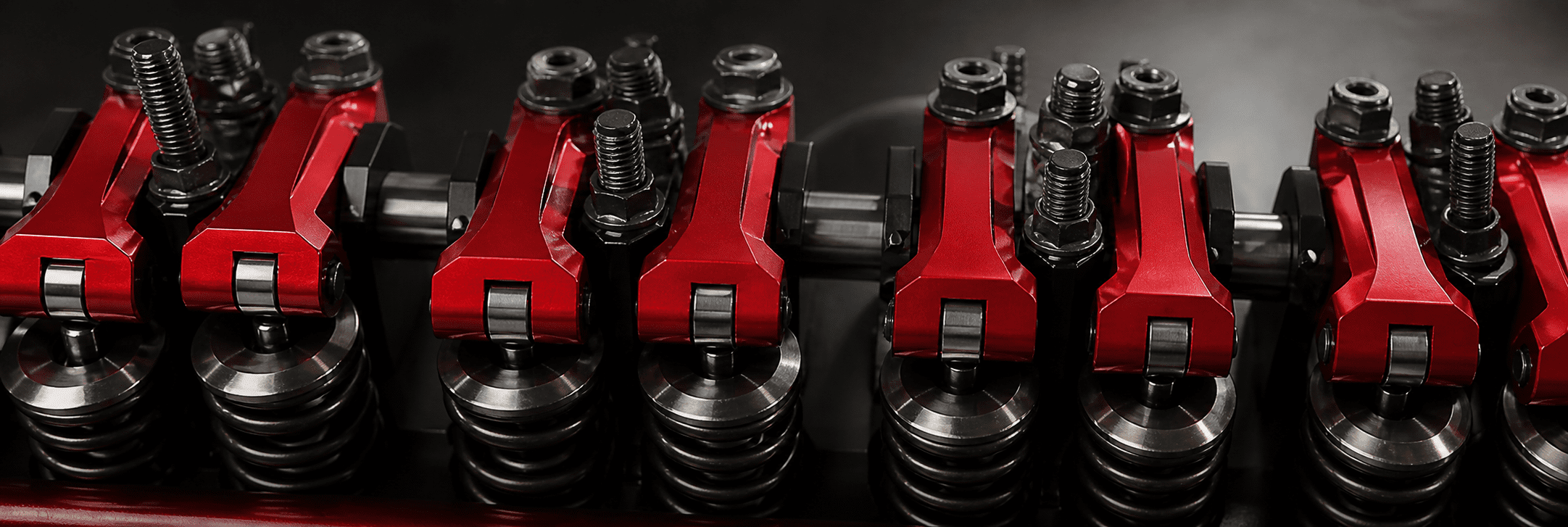
There is a particular type of engine modification that appeals enormously to the classic car enthusiast: one that can be described as a performance upgrade, costs relatively little, requires no machine tools, and provides a cast-iron excuse to spend a pleasant afternoon in the garage with the rocker cover off. Roller rockers are exactly that modification. They are also, it must be said upfront, rather more nuanced in their benefits than the marketing copy on the box might have you believe. This guide covers what roller rockers actually do, what they honestly deliver, and whether fitting a set to your classic is a worthwhile afternoon’s work or an expensive act of optimism.
What a rocker arm actually does
Before discussing how roller rockers improve on a standard rocker, it helps to understand what a rocker arm is doing in the first place. In a pushrod engine (which covers the overwhelming majority of classic British cars, from the A-series Mini to the Ford Kent to the Triumph straight-six), the camshaft sits in the block. The cam lobes push upward on lifters, which push upward on pushrods, which push on one end of the rocker arm. The rocker arm pivots on a central fulcrum and pushes the other end downward against the tip of the valve, opening it against spring pressure. The camshaft makes the valve go down, through the medium of a rocker arm acting as a teeter-totter. Simple. Elegant. And, in standard form, rubbing metal against metal in a way that generates friction, heat, and wear.
The standard rocker arm on most classic engines has a flat or curved pad at the tip that slides across the top of the valve stem as the rocker travels through its arc of movement. Every time the valve opens, this sliding contact scrubs sideways across the valve stem tip. Over millions of engine cycles this causes measurable wear to both the rocker tip and the valve stem itself. More importantly, because the rocker is moving in an arc while the valve can only move straight up and down, the standard rocker also pushes laterally against the valve stem. This side-loading pushes the stem against its guide, wearing the guide into an hourglass shape over time. A worn valve guide allows the valve to wobble, reduces the seal on the valve seat, and eventually causes the kind of compression loss that makes your classic feel as though it has been replaced with a slightly different and less satisfying car while you were not looking.
What the roller actually changes
A roller rocker replaces the sliding pad at the valve stem tip with a small needle roller bearing mounted on a pin. Instead of sliding across the valve stem, it rolls. Rolling contact generates dramatically less friction than sliding contact. The roller also tends to reduce the lateral side-loading on the valve stem because the rolling action is more forgiving of the geometric arc the rocker travels through. Less side-loading means less valve guide wear. Less friction means less heat in the valve train. Both are genuinely useful outcomes, and both are things that standard rockers do not offer.
A good quality roller rocker also typically uses needle roller bearings at the central fulcrum point rather than the plain bearing or pressed bush of a standard rocker. This further reduces friction losses and improves the consistency of the rocker ratio, because a needle roller bearing has less deflection under load than a worn plain bush. Consistency matters more than people often realise. A rocker arm that is nominally 1.5:1 ratio but running on a worn bush may actually be delivering a somewhat different ratio on different valves, introducing variation in valve lift that the camshaft grinder did not intend and the engine certainly did not ask for.
The honest truth about power gains
Here is where a degree of candour is required, because the claims made for roller rockers in terms of outright power are frequently overstated. Friction reduction alone, without any change in rocker ratio, typically produces modest power gains. On a small-displacement classic engine, the improvement from friction reduction alone is unlikely to be dramatic on a standard dyno run. If someone is promising you ten to fifteen horsepower from a set of standard ratio roller rockers on your 1,800cc MGB engine, they are being optimistic. On a small four-cylinder classic, a realistic gain from the friction reduction alone is perhaps two to five horsepower, concentrated at higher rpm where the valvetrain is working hardest and friction losses matter most.
The more significant power gains come when roller rockers are fitted with a higher ratio than the standard item. A standard MGB rocker arm, for example, operates at approximately 1.45:1 ratio. Fitting roller rockers at 1.5:1 increases the valve lift without requiring a different camshaft. More valve lift means more air and fuel can enter the cylinder on each intake stroke, and more exhaust can escape on the way out. On an engine that is otherwise well set-up, this ratio increase can produce a more meaningful improvement than the friction reduction alone. The combination of reduced friction, improved rocker consistency, and increased lift is where the real case for roller rockers is made. Our SU carburettor guide covers the fuelling side of the equation for those building a broader tune.
The A-series engine fitted to the Classic Mini and the MG Midget is one of the engines specifically identified in engineering circles as benefiting meaningfully from roller rockers, owing to the relatively heavy valve train and the wear characteristics of the standard rocker arrangement. If you have a Classic Mini or an MG Midget and are thinking about a modest tune, roller rockers are a sensible early step.
The longevity case: arguably the stronger argument
If the power case for roller rockers is nuanced, the longevity case is considerably more straightforward. Reduced friction means reduced heat, and reduced heat means things last longer. Owners who have fitted roller rockers to classic engines consistently report lower oil temperatures, which in turn means the oil retains its viscosity longer during a hard run and protects the rest of the engine more effectively. Lower valve stem side-loading means valve guides last longer before wearing oval. Reduced wear at the rocker tip means the rocker itself lasts longer. None of this is glamorous. None of it shows on a dyno chart. But a classic engine that is still in excellent health at 60,000 miles rather than requiring head work at 40,000 miles is a real and tangible benefit, particularly for anyone who has seen the bill for a head rebuild on an old six-cylinder.
The camshaft also benefits. Standard rockers in poor condition or running on an aggressive cam profile can cause accelerated lobe wear. Roller rockers, with their more consistent geometry and reduced friction, are gentler on cam lobes. If you are fitting a performance camshaft as part of a broader engine tune, roller rockers are worth fitting at the same time. They protect the investment. For engines that runs hot or are used hard, the reduced operating temperatures in the valve train can be the difference between a cam that lasts for years and one that does not. Our cooling system guide covers the thermal management side if you are building a performance engine and want the complete picture.
Fitting roller rockers: what to check
Geometry
Rocker geometry matters more with roller rockers than with standard items. Because the roller must roll across the valve stem tip rather than slide, the rocker needs to be correctly positioned so that the roller contacts the centre of the valve stem at mid-lift and tracks correctly through its arc of travel. If the geometry is wrong, the roller runs off the edge of the stem tip at high lift, causing uneven wear and defeating much of the purpose. Check the contact pattern on the valve stem tip after a brief running period and verify the roller is tracking centrally. Shims under the rocker pedestals or adjustable pushrods can correct geometry if required.
Pushrod length
If you fit roller rockers with a different ratio than the originals, the pushrod length may need to change to maintain correct geometry. This is particularly relevant when fitting higher ratio rockers alongside a new camshaft. Many specialist suppliers offer pushrods in a range of lengths and can advise on the correct specification for a given combination. Do not assume the original pushrods will be correct with a different rocker ratio. Check.
Valve spring pressure
Higher ratio roller rockers increase valve lift, which means the valve spring must travel further on each cycle. Ensure the valve springs have sufficient travel remaining at maximum lift and that the coils do not contact one another (coil bind) at full lift. Coil bind is immediately and comprehensively catastrophic. It is not the sort of thing you want to discover at six thousand rpm. Check the clearance at maximum lift with the appropriate tool before the engine goes back together.
Oil supply
Roller rockers generally require less oil than standard rockers because the needle bearings are more efficient. However they still need adequate lubrication. Check that the oil feed passages to the rocker shaft or pedestals are clear and flowing correctly before assembly. A blocked oil feed to a roller rocker does not improve matters. Some roller rocker kits include specific oil feed arrangements and the manufacturer’s instructions should be followed rather than ignored on the assumption that all rocker assemblies are broadly similar. They are not.
Valve clearance
Set the valve clearances to the manufacturer’s specification for the new rockers, which may differ from the original specification. Some roller rocker kits specify a slightly different clearance than standard. Check the documentation. And then check it again, because incorrect valve clearances on a freshly rebuilt top end is exactly the sort of thing that sends an otherwise successful afternoon in the wrong direction. Our full guide to adjusting valve clearances on a classic car covers the complete procedure including the rule of nine, feeler gauge technique, and the Clickadjust tool. Our pre-season safety check guide covers the valve clearance check as part of the annual inspection routine for any classic.
What to buy
Quality matters considerably with roller rockers. The needle bearings at the tip and fulcrum are small components operating under significant loads, and a cheap set with soft bearing material or inadequate manufacturing tolerances will wear rapidly and deliver none of the promised benefits. Reputable suppliers for classic British engines include Piper Cams, Kent Cams, and various marque specialists who supply kits specifically designed for particular engines. Buying the cheapest set on an auction site and hoping for the best is, as a strategy, not recommended. This is one area where spending a little more on a known brand is straightforwardly worthwhile.
Fitting roller rockers is one of those modifications that is most satisfying when done alongside other sensible engine work, a new camshaft, fresh valve stem seals, and a good decoke, rather than as an isolated bolt-on to an otherwise untouched engine. They are not a magic solution. But they are a genuine and honest improvement to valve train efficiency, longevity, and, with the right ratio, a modest and real performance gain. Which, frankly, is rather more than can be said for many things sold on the promise of transforming your classic. Once the rockers are fitted, the next job is setting the clearances correctly — our valve clearance adjustment guide covers everything you need to get it right first time.
This page contains affiliate links. If you click a link and make a purchase, Classic Car Hub may earn a small commission at no extra cost to you.