
The MGB is the most successful British sports car ever built. Over 523,000 were produced at the Abingdon factory between 1962 and 1980, a figure that puts it in a completely different league from every other British sports car of its era. The E-Type sold fewer than 73,000. The Triumph TR6 managed around 94,000. The MGB simply outsold everything by making itself genuinely accessible: practical, robust, attractive, and enjoyable to drive at a price that ordinary buyers could afford.
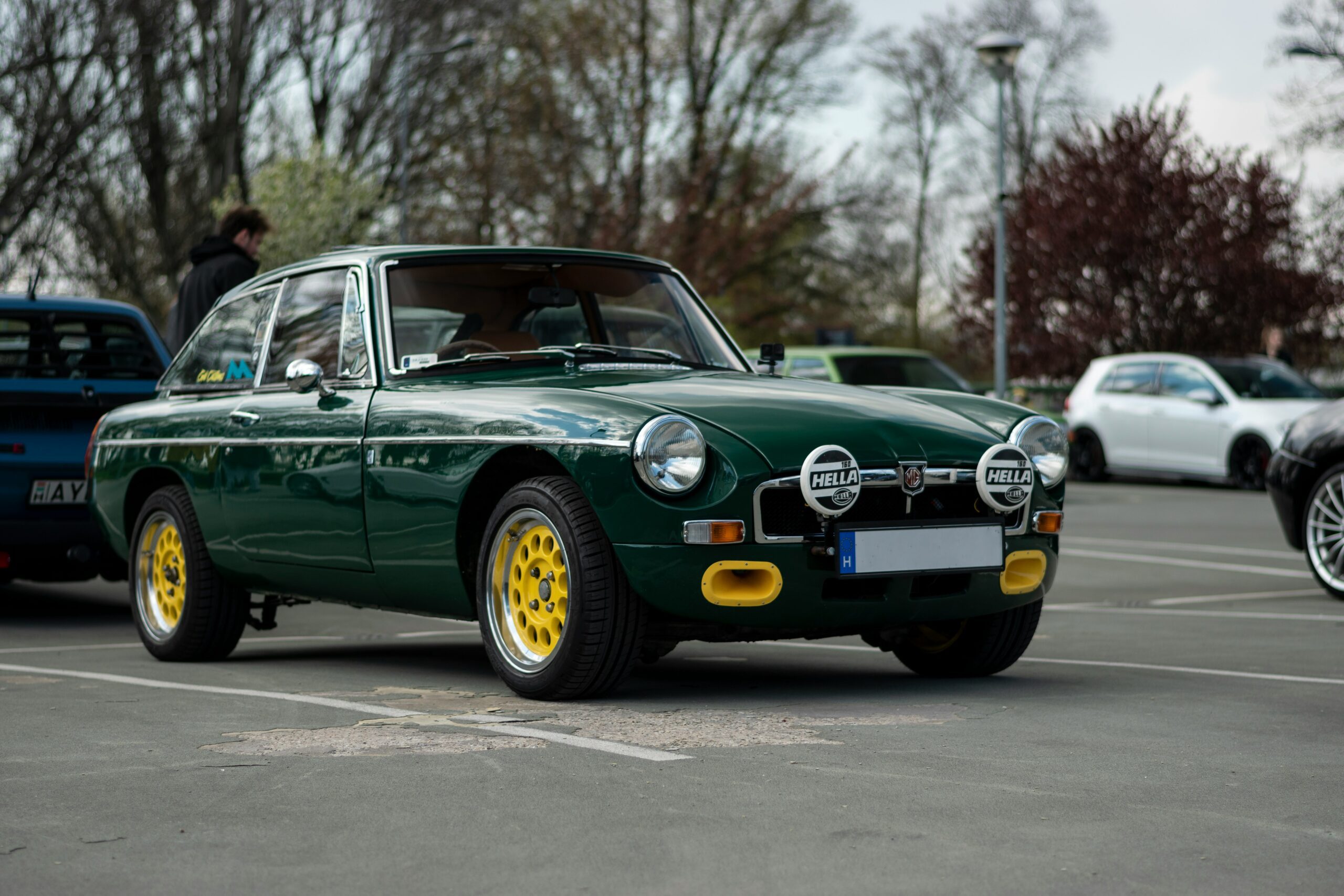
Half a century on, the parts supply remains exceptional, the community is enormous, and good examples are still accessible at prices that have not lost touch with reality. The B-Series engine is one of the most thoroughly understood units in classic car history. Every problem the car develops has been solved, documented, and discussed in detail thousands of times. For a first-time classic car buyer, the MGB is one of the most sensible choices available.
The MGB was built in Roadster and GT bodystyles, and in MGC and V8 variants that offer a more specialist ownership experience. Chrome bumper cars from 1962 to 1974 are the most desirable. Rubber bumper cars from 1974 to 1980 are more affordable and mechanically identical.
Quick Facts
| Detail | Information |
|---|---|
| Years produced | 1962 to 1980 |
| Manufacturer | MG (British Motor Corporation / British Leyland) |
| Body styles | 2-door roadster, 2-door GT fastback coupe |
| Engine options | 1798cc B-Series; 2912cc six (MGC); 3528cc Rover V8 (MGB GT V8) |
| Power range | Approximately 95bhp to 137bhp (road cars) |
| Transmission | 4-speed manual; optional Laycock overdrive |
| Drive layout | Rear-wheel drive |
| Approx. UK value range | £4,000 to £30,000+ depending on variant and condition |
Specifications
| Specification | MGB Roadster (standard) | MGB GT V8 |
|---|---|---|
| Engine | 1798cc B-Series OHV | 3528cc Rover V8 OHV |
| Power | Approx. 95bhp | Approx. 137bhp |
| Torque | Approx. 110lb/ft | Approx. 193lb/ft |
| Gearbox | 4-speed manual, optional overdrive | 4-speed manual, optional overdrive |
| Suspension | Coil spring front, leaf spring rear | Coil spring front, leaf spring rear |
| Brakes | Disc front, drum rear | Disc front, drum rear |
| Kerb weight | Approx. 915kg | Approx. 940kg |
| Top speed | Approx. 105mph | Approx. 125mph |
| 0 to 60 mph | Approx. 11 seconds | Approx. 7.7 seconds |
Model Variants
| Variant | Years | Engine | Power | Key Differences | Typical UK Value |
|---|---|---|---|---|---|
| MGB Roadster chrome bumper | 1962 to 1974 | 1798cc B-Series | Approx. 95bhp | Original chrome bumpers, lower ride height | £8,000 to £22,000 |
| MGB Roadster rubber bumper | 1974 to 1980 | 1798cc B-Series | Approx. 95bhp | Polyurethane bumpers, raised ride height | £5,000 to £14,000 |
| MGB GT chrome bumper | 1965 to 1974 | 1798cc B-Series | Approx. 95bhp | Pininfarina-influenced fastback, occasional rear seats | £7,000 to £16,000 |
| MGB GT rubber bumper | 1974 to 1980 | 1798cc B-Series | Approx. 95bhp | As above with rubber bumpers | £5,000 to £12,000 |
| MGC Roadster and GT | 1967 to 1969 | 2912cc six-cylinder | Approx. 145bhp | Larger engine, bonnet bulge, revised suspension | £14,000 to £25,000 |
| MGB GT V8 | 1973 to 1976 | 3528cc Rover V8 | Approx. 137bhp | GT bodystyle only, 2591 built | £18,000 to £35,000+ |
For best value, a solid chrome bumper GT represents good buying at a modest discount to equivalent Roadsters. The Roadster remains the most popular choice. The rubber bumper cars offer the most affordable route into MGB ownership and are mechanically identical to the chrome bumper cars. The MGC and MGB GT V8 are specialist purchases requiring Heritage Certificate verification. For a beginner classic, any chrome bumper Roadster or GT in honest structural condition is an excellent starting point.
Common Problems
- Sill rust: The sills are structural on the MGB monocoque and the most critical rust location. Check both outer and inner sill structure carefully. Probe at the lower edges and rear quarter. Outer sills fitted over rotten inners are a common and dangerous problem.
- Floor pan rust: Lift all carpets and mats and inspect the floor directly. Water enters through deteriorated door seals and windscreen seals and sits on the floor. Tap with a screwdriver handle to detect thin or holed metal.
- Front inner wing and suspension turret rust: Rot here is expensive to repair correctly and compromises front end structural integrity. Check carefully for previous welded repairs and fresh underseal.
- Rear crankshaft oil seal: Almost universal on older B-Series engines. Seepage is expected. Significant dripping requires gearbox removal to address. Budget for it.
- Head gasket failure: Caused by overheating or poor maintenance. Check the coolant for contamination and the oil filler cap for emulsification.
- Three-bearing crankshaft wear: Early cars to October 1964 use a three-bearing crank. More susceptible to wear at high mileage than the five-bearing unit introduced from October 1964 onwards.
- Soft top condition on Roadsters: Check the hood for tears, crazing in the rear window, and correct sealing at the windscreen rail. Frame bows should be straight and undamaged.
- V8 and MGC authenticity: Factory V8 conversions are extremely common. Always verify with a Heritage Certificate before paying any premium for these variants.
Running and Maintenance
The MGB is one of the most straightforward classic British sports cars to maintain. The B-Series engine is simple, understressed, and extensively documented. The MG Owners Club and the MG Car Club both offer comprehensive technical resources. Parts availability from Moss Europe, Brown and Gammons, and numerous other suppliers is excellent.
The Laycock overdrive fitted to many cars is worth seeking out for comfortable modern road use. The SU carburettors are simple to maintain. Our SU carburettor guide covers setup and tuning in detail.
All MGBs qualify for free historic vehicle road tax. Classic specialist insurance is widely available at competitive premiums.
UK Values
| Condition | Rubber bumper | Chrome bumper Roadster | Chrome bumper GT | MGC / V8 |
|---|---|---|---|---|
| Project | £1,500 to £3,500 | £2,500 to £5,000 | £2,000 to £4,500 | £5,000 to £10,000 |
| Usable | £5,000 to £9,000 | £8,000 to £14,000 | £7,000 to £12,000 | £14,000 to £22,000 |
| Good | £9,000 to £13,000 | £14,000 to £20,000 | £12,000 to £18,000 | £22,000 to £30,000 |
| Excellent or concours | £13,000 to £18,000 | £20,000 to £28,000 | £18,000 to £24,000 | £30,000+ |
The MGB market has been rising steadily. Chrome bumper cars in good original condition have seen the strongest appreciation. Rubber bumper cars represent good value and the gap between the two is narrowing. V8 and MGC cars with documented provenance continue to attract a significant premium. As always, originality and service history are the key value drivers.
Buyer’s Tips
- Inspect sills, floor pans, and front inner wings first. These are the structural rust locations and the most commonly disguised.
- Check the commission plate for the five-bearing engine suffix. Cars from October 1964 onwards have the more durable five-bearing crankshaft.
- Obtain a Heritage Certificate for any MGC or MGB GT V8 purchase. Factory V8 conversions are common and should not command the same price as an original.
- Test the overdrive at speed if fitted. Check it engages and disengages cleanly without slip or judder.
- Inspect the soft top frame on Roadsters for bent or broken bows. A new hood is not expensive but fitting it correctly takes skill.
- Join the MG Owners Club or MG Car Club before buying. Both can assist with pre-purchase inspections and current valuations.
Current Listings and Parts
Use the links below to browse current UK listings, parts and spares for the MGB.
- Browse MGB classic cars for sale on eBay
- Browse MGB parts and spares on eBay
- Browse MGB restoration parts on eBay
Find More Classic Car Information
Looking for buyers guides, workshop advice, paint codes or restoration tips for your favourite classic? Search the Classic Car Hub below.
Frequently Asked Questions
Is the MGB a good classic car?
Yes. The MGB is widely considered the most approachable and practical classic British sports car available. Outstanding parts availability, exceptional community support, and a straightforward mechanical specification make it one of the best all-round classics on the market.
Is the MGB reliable?
The B-Series engine is robust and long-lived with regular maintenance. Oil leaks from the rear crankshaft seal are almost universal on older cars but manageable. A well-maintained MGB is one of the more dependable classic sports cars available.
What are the main problems with the MGB?
Sill and floor pan rust are the primary structural concerns. Rear crankshaft oil seal leaks are near-universal. Head gasket failure on neglected or overheated engines is a known issue. Fake MGC and V8 cars require Heritage Certificate verification.
Are parts easy to find for the MGB?
Parts availability for the MGB is excellent across all mechanical and bodywork areas. Moss Europe, Brown and Gammons, and numerous other specialists hold comprehensive stocks. Body panels, trim, and mechanical components are all readily available.
Is the MGB a good investment?
Chrome bumper cars in good original condition have appreciated consistently and the trend continues. Rubber bumper cars represent good value with a narrowing gap to chrome bumper equivalents. MGC and V8 cars with documented provenance continue to attract strong prices at auction.
This page contains affiliate links. If you click a link and make a purchase, Classic Car Hub may earn a small commission at no extra cost to you.