
The Mazda MX-5 Mk1, known internally as the NA and produced from 1989 to 1997, is one of the most significant sports cars of the twentieth century. Mazda’s engineers set out to create a modern version of the lightweight British sports car formula, taking inspiration from the Lotus Elan and the original spirit of the MGB. What they produced was a rear-wheel-drive two-seater with pop-up headlamps, double wishbone suspension all round, and a driving experience that embarrassed cars costing considerably more.
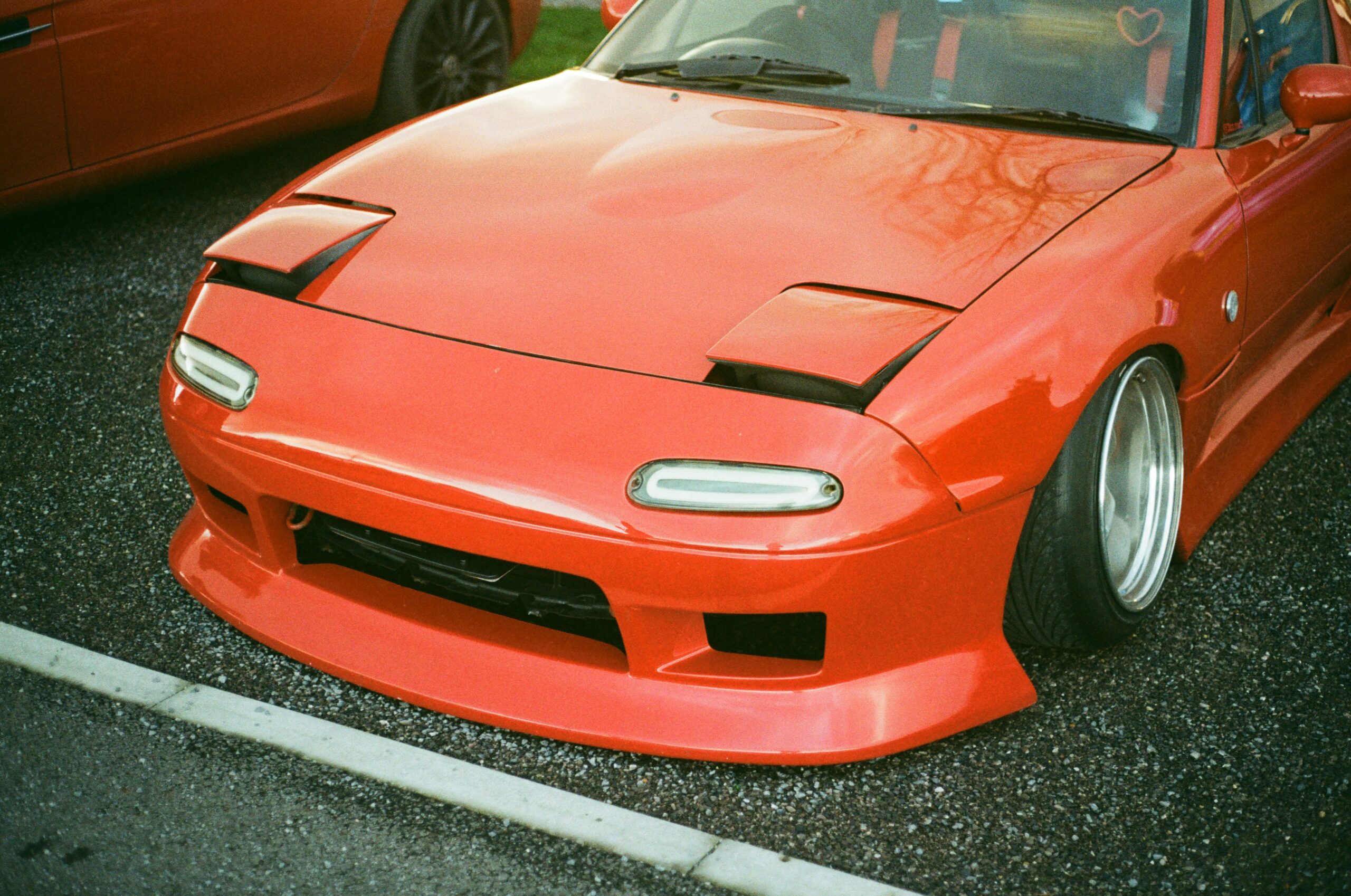
The MX-5 revived the affordable sports car segment almost single-handedly. When it launched at the Chicago Motor Show in February 1989 the response was extraordinary. Over 400,000 NA-generation cars were built before the Mk2 replaced it, and the model as a whole has gone on to become the best-selling two-seat sports car in history. The Guinness World Records confirm this. It is not a close-run thing.
The Mk1 is now firmly in classic car territory and values are rising. Its combination of Japanese reliability, sharp handling, strong parts availability, and genuine driving pleasure at an accessible price makes it one of the most compelling sports car classics available today.
Quick Facts
| Detail | Information |
|---|---|
| Years produced | 1989 to 1997 (Mk1 / NA generation) |
| Manufacturer | Mazda |
| Body styles | 2-door roadster (soft top); optional detachable hardtop |
| Engine options | 1597cc and 1839cc DOHC four-cylinder |
| Power range | Approximately 114bhp to 131bhp depending on specification |
| Transmission | 5-speed manual; 4-speed automatic on some markets |
| Drive layout | Rear-wheel drive |
| Approx. UK value range | £3,000 to £18,000 depending on specification and condition |
Specifications
| Specification | 1.6 (1597cc) | 1.8 (1839cc) |
|---|---|---|
| Engine | 1597cc DOHC 16v B6-ZE | 1839cc DOHC 16v BP-ZE |
| Power | Approx. 114bhp | Approx. 131bhp |
| Torque | Approx. 100lb/ft | Approx. 114lb/ft |
| Gearbox | 5-speed manual | 5-speed manual |
| Suspension | Double wishbone front and rear | Double wishbone front and rear |
| Brakes | Disc front, drum rear (early); disc all round (later) | Disc all round |
| Kerb weight | Approx. 940kg | Approx. 960kg |
| Top speed | Approx. 114mph | Approx. 123mph |
| 0 to 60 mph | Approx. 8.7 seconds | Approx. 7.9 seconds |
Model Variants
| Variant | Years | Engine | Power | Key Differences | Typical UK Value |
|---|---|---|---|---|---|
| MX-5 1.6 (early) | 1989 to 1993 | 1597cc | 114bhp | Drum rear brakes on early cars, lighter weight | £3,000 to £9,000 |
| MX-5 1.6 (revised) | 1993 to 1997 | 1597cc | 114bhp | Minor revisions, some with limited slip differential | £3,500 to £10,000 |
| MX-5 1.8 S | 1994 to 1997 | 1839cc | 131bhp | Larger engine, standard LSD on UK S models | £5,000 to £14,000 |
| MX-5 1.8 RS | 1994 to 1997 | 1839cc | 131bhp | Higher specification, Torsen LSD, sport suspension | £6,000 to £16,000 |
| Special editions (Momo, Gleneagles, Harvard, etc.) | Various | 1597cc or 1839cc | 114 to 131bhp | Various trim and equipment packages | £4,000 to £14,000 |
For the best value entry point, a solid 1.6 in honest structural condition offers the pure NA driving experience at an accessible price. The most desirable variants are the 1.8 RS and S models with the Torsen limited slip differential, which transforms the car’s cornering behaviour and are sought after accordingly. A 1.6 in good condition represents the ideal beginner’s choice, offering the complete MX-5 experience without the premium attached to 1.8 variants.
Common Problems
- Sill and floor rust: The primary structural concern on the Mk1. The sills rot from the inside out and from road salt underneath. Tap both sills firmly and probe along the lower edges. Floor pans rust where water sits under the mats from poor hood sealing.
- Hood and hood frame: The soft top deteriorates with age and UV exposure. The plastic rear window crazes. Hood frames corrode and the locking mechanism wears. A leaking or poorly sealing hood allows water into the cabin and accelerates floor and sill rot.
- Rear arch and jacking point rust: The rear wheel arches and the jacking point reinforcements are known rust areas. Check carefully as repair can be more involved than it initially appears.
- Catalytic converter failure: Early Mk1 catalysts are old enough to fail. Symptoms include poor running, rattling under the car, and failed emissions tests. Replacement is straightforward.
- Cam cover and rocker gasket oil leaks: Minor oil leaks from the cam cover are common on older engines. Not serious but worth noting. The gasket is inexpensive and easy to replace.
- Gearbox wear: The 5-speed gearbox is generally robust but baulking on second gear is common on high mileage examples. Synchromesh wear is gradual and manageable.
- Pop-up headlamp motor failure: The electric motors operating the pop-up headlamps can fail. Check both headlamps open fully and close completely. Replacement motors are available and the job is straightforward.
- Coolant hose deterioration: All coolant hoses on a 30-year-old car should be considered for replacement. Inspection and preventive replacement is cheap compared to the cost of an overheated engine.
Running and Maintenance
The Mazda MX-5 Mk1 is considerably easier to maintain than most British sports cars of equivalent age. The Japanese engines are well engineered and respond reliably to regular servicing. Parts availability is very good both from Mazda dealers and from a thriving specialist and performance aftermarket.
The MX-5 Owners Club and various online communities provide extensive technical knowledge. The car’s popularity means that virtually every problem has been encountered, diagnosed, and solved by the community. Running costs are modest by sports car standards.
Early Mk1 cars built before 1989 do not qualify for historic vehicle road tax exemption at the time of writing, as the rolling 40-year threshold has not yet reached 1989. Cars from that year will qualify from 2029 onwards. Check the current DVLA exemption list for the specific year of any car you are considering.
UK Values
| Condition | 1.6 Standard | 1.8 S / RS |
|---|---|---|
| Project | £1,000 to £2,500 | £2,000 to £4,000 |
| Usable | £3,000 to £6,000 | £5,000 to £9,000 |
| Good | £6,000 to £10,000 | £9,000 to £14,000 |
| Excellent or concours | £10,000 to £15,000 | £14,000 to £18,000 |
The Mk1 MX-5 market is rising steadily as the cars enter classic status. Low-mileage, unmodified examples in original condition are increasingly sought after. Modified cars, while common and often well done, typically command lower prices than standard examples. 1.8 RS and S variants with the Torsen LSD are the most desirable and have seen the strongest appreciation. Condition of the body and hood are the primary value drivers.
Buyer’s Tips
- Check the sills and floor pans first. These are the structural rust locations and the difference between a straightforward purchase and an expensive project.
- Inspect the hood carefully and check it seals correctly at the windscreen rail and rear quarters. A poorly sealing hood causes floor and sill rot.
- Check both pop-up headlamps operate fully and retract cleanly. Test at night if possible.
- Confirm whether the car has a limited slip differential. The Torsen LSD fitted to 1.8 RS models is a significant driving benefit and value point. Check the option list or ask the seller directly.
- Look for original, unmodified cars. The MX-5 is one of the most heavily modified classics available and standard examples are now at a premium.
- Ask for a full service history. Japanese engine longevity depends heavily on regular oil changes and coolant maintenance.
- The MX-5 Owners Club is an excellent resource for pre-purchase advice, technical information, and current valuations.
Current Listings and Parts
Use the links below to browse current UK listings, parts and spares for the Mazda MX-5 Mk1.
- Browse Mazda MX-5 Mk1 cars for sale on eBay
- Browse Mazda MX-5 Mk1 parts and spares on eBay
- Browse Mazda MX-5 Mk1 restoration parts on eBay
Find More Classic Car Information
Looking for buyers guides, workshop advice, paint codes or restoration tips for your favourite classic? Search the Classic Car Hub below.
Frequently Asked Questions
Is the Mazda MX-5 Mk1 a good classic car?
Yes. The Mk1 MX-5 is one of the most rewarding driver’s classics available at any price point. Its double wishbone suspension, rear-wheel drive balance, and responsive engines deliver a driving experience that genuinely justifies its reputation. Japanese build quality means it is more reliable than most British sports cars of comparable age.
Is the Mazda MX-5 Mk1 reliable?
Very. The 1.6 and 1.8 engines are robust and well engineered. With regular servicing, oil changes, and attention to coolant hoses and the hood seal, a Mk1 MX-5 is one of the more dependable sports car classics available.
What are the main problems with the Mazda MX-5 Mk1?
Sill and floor rust caused by hood leaks is the primary concern. Pop-up headlamp motor failure is common but straightforward to address. Rear arch rust and hood deterioration are the other most frequently encountered issues.
Are parts easy to find for the Mazda MX-5 Mk1?
Yes. Parts availability is very good from both Mazda and a wide range of aftermarket suppliers. The car’s popularity and production numbers mean that mechanical components, body panels, hood replacements, and trim items are all readily available.
Is the Mazda MX-5 Mk1 a good investment?
Values are rising as the cars enter classic status. Low-mileage, standard, unmodified examples are appreciating most strongly. The 1.8 RS with Torsen LSD commands a consistent premium. Given the car’s global recognition and driving reputation, long-term demand is unlikely to diminish.
This page contains affiliate links. If you click a link and make a purchase, Classic Car Hub may earn a small commission at no extra cost to you.