
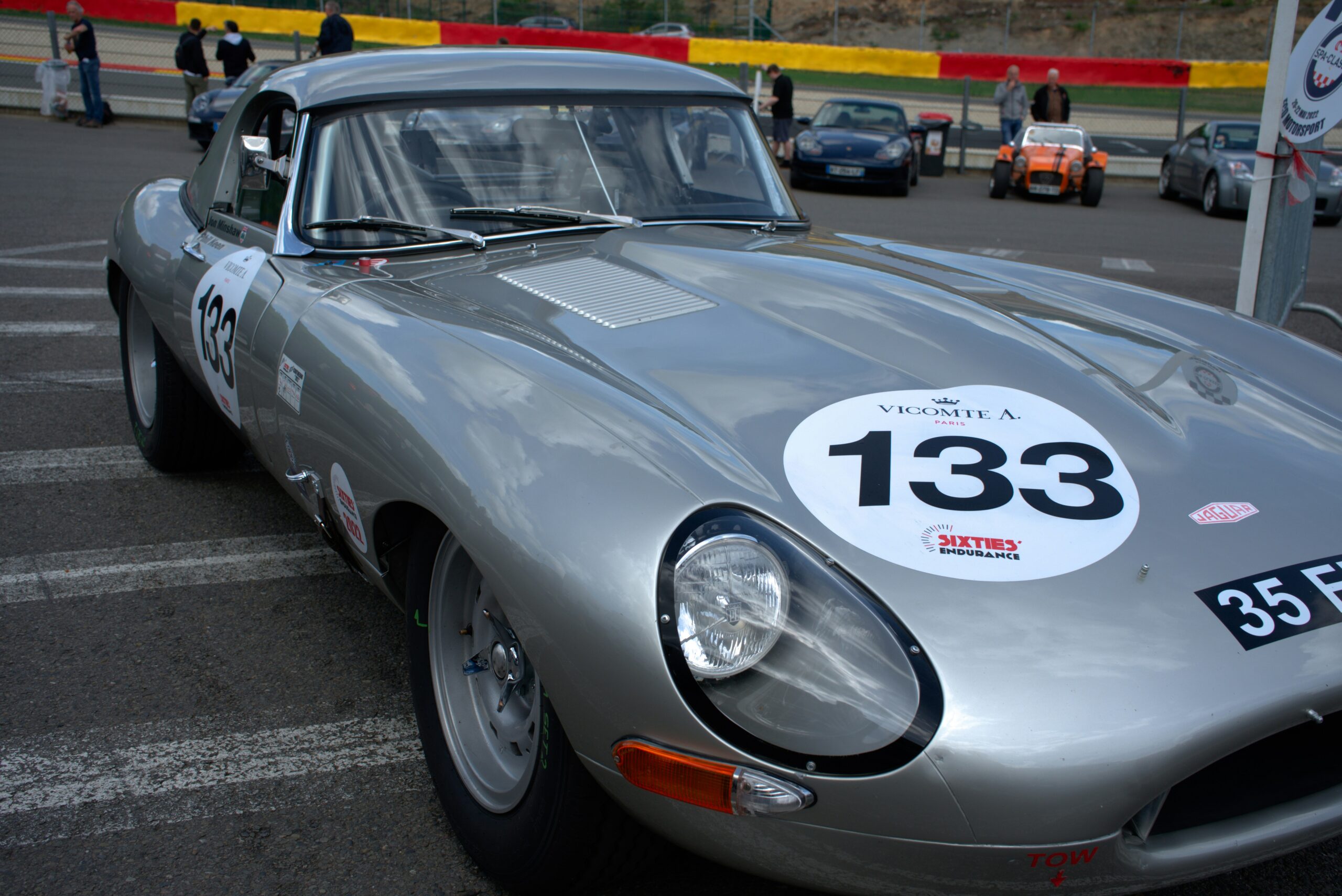
When Enzo Ferrari first saw the Jaguar E-Type, he called it the most beautiful car in the world. This is the kind of endorsement that most manufacturers would have printed on everything they could get their hands on, and Jaguar was no exception. It has been repeated so many times in the sixty years since that it has become the first thing most people say when the E-Type comes up, which is both a tribute to the car and a slight injustice to it, because the E-Type is considerably more than a quote from a man who made Ferraris. It goes, handles, sounds extraordinary, and has managed to remain genuinely desirable across six decades without a single piece of marketing hyperbole being required to sustain that desirability. The car does the work.
Buying one requires care proportionate to the investment involved. Entry-level E-Types now start above £30,000 for projects in need of restoration, and the market for clean, correctly specified examples has been heading in one direction for some time. Sixty-seven thousand E-Types were built between 1961 and 1975, which sounds like a lot until you consider that many of them have been poorly restored, converted from left to right-hand drive, significantly modified, or simply lost to time. The ones in genuinely good condition and correct specification are fewer than the total production number suggests, and they cost accordingly.
Which E-Type: three series, three different cars
The E-Type was produced in three series across a fourteen-year production run, and the buying decision begins with understanding what each series actually is rather than simply which one is the most affordable.
Series 1 (1961 to 1968)
The Series 1 is the one Enzo Ferrari was talking about. Covered headlights behind a glass cowl, a narrower grille opening, a more cohesive visual profile, and the original XK six-cylinder engine in either 3.8-litre or 4.2-litre form. The 3.8 cars (1961 to 1964) are the most collectible, with the very earliest examples carrying external bonnet latches, an aluminium bonnet and doors, a flat floor, and various other details that identify the first cars and attract the highest prices. By the early 2020s, a properly sorted Series 1 3.8 roadster was regularly reaching £120,000 at auction. The 4.2-litre cars introduced in 1964 brought a fully synchronised gearbox, better brakes, and a more usable engine without losing the visual appeal of the original. Most specialists recommend the 4.2 for an owner intending to drive the car rather than preserve it, and the price premium of the 3.8 is a collector value rather than a practical one.
Series 1 cars built for the US market from 1968 onward are sometimes called Series 1.5: they have the Series 1 body but the revised emissions equipment that foreshadowed the Series 2, and they combine the original visual appeal with the practical limitations of the detuned engine. They are less sought after than true Series 1 cars and less common than Series 2s, which puts them in a slightly awkward position in the market.
Series 2 (1968 to 1971)
The Series 2 carries the visual cost of American safety and emissions regulations: exposed headlights behind a different front treatment, a larger grille, revised taillights, and an engine that was increasingly compromised in US specification as the 1960s gave way to the 1970s. UK-specification Series 2s are better than their reputation suggests: the exposed headlights are a matter of taste, the changes to safety equipment were not unreasonable, and the 4.2-litre engine in UK specification remains excellent. Around 19,000 Series 2s were built, making them more numerous than Series 1s, and their relative affordability puts a decent Series 2 coupé or roadster in reach at £50,000 to £80,000 depending on condition.
Series 3 (1971 to 1975): the undervalued E-Type
The Series 3 is the most different E-Type and the least appreciated. It received the 5.3-litre V12 engine, a longer wheelbase available in roadster or 2+2 form, wider tracks, and a flared wheel arch treatment. The V12 is a magnificent engine: silky smooth, producing 272 brake horsepower in original specification, and delivering a character unlike the six-cylinder cars. The Series 3 is the grand touring E-Type rather than the sports car, and it does the grand touring role brilliantly. Values for Series 3s start significantly lower than equivalent Series 1 examples, which specialists consistently identify as an anomaly that the market may eventually correct. A decent running Series 3 can be found for £30,000 to £60,000, which by E-Type standards represents genuine value for a very fine car. The V12 is not cheap to rebuild when required, but it is durable and rewarding in good condition.
What to look for
The bodywork
The E-Type has a monocoque construction with a separate forward sub-frame carrying the engine and front suspension. Both can rust, and both are expensive to repair when they do. The areas of primary concern are the floor pans (particularly on roadsters), the sills, the door bottoms, the front valance, the engine rails (especially adjacent to the battery where acid damage accelerates corrosion), the rear arches and inner arches, and the boot floor. The bonnet is constructed from multiple sections bolted together: rust begins in the seams behind the chrome trim and is not always visible until the seams are probed. A magnet run over the bodywork identifies filler; an ice pick or similar tool gently applied to the sills and floors identifies the extent of any rust beneath the surface.
Panel fit and alignment matter on the E-Type beyond the normal aesthetic concern: the monocoque construction means that a car that has suffered significant structural rust will have doors and bonnets that no longer close properly. Panels that require more than modest persuasion are telling you something about the structure beneath them. Do not accept misaligned panels as the quirks of an old car without investigating the cause.
The XK engine
The XK six-cylinder is one of the most celebrated British engines of the postwar era and deserves that reputation. A healthy example should show 40 to 45 psi of oil pressure at 3,000 rpm. Lower readings indicate a worn engine requiring attention. Minor oil seepage is essentially universal on cars of this age and should not cause alarm; significant leaks from the front and rear crankshaft seals are more relevant. Blue smoke on startup suggests worn valve stem seals; persistent blue smoke under load points to worn rings and bores. Listen for bearing rumble at idle and the characteristic end-float tap from a worn crankshaft thrust washer. The lumpy running that many E-Types display at idle is frequently a carburation issue: the three SU carburettors require careful setup and are not pleasant to work on. A specialist is the correct person for SU carburettor work on a triple installation.
The clutch on the E-Type requires the engine and gearbox to be removed together as a unit, with the bonnet coming off to allow the assembly to exit the car. This is a significant job and a significant cost when the time comes. The condition of the clutch should be assessed during the test drive: any slip, judder, or difficulty selecting gears is worth knowing about before purchase rather than discovering afterward.
The suspension and steering
The E-Type’s independent rear suspension is contained in a pressed steel cage bolted to the floor pan. This cage rusts. When it does, the rear suspension geometry cannot be relied upon and the repair is a significant undertaking. Check the cage mounts and the cage itself for corrosion before anything else at the rear of the car. At the front, check for leaking dampers, split gaiters on the rack and pinion steering, worn wheel bearings, and rust at the suspension mounting points.
Originality and documentation
Jaguar Heritage can supply a Heritage Certificate for any E-Type, confirming the car’s original build specification including colour, trim, and equipment. These cost £50 and are worth obtaining before any significant purchase: they establish whether the car has been converted from left to right-hand drive, whether the engine and gearbox are original to the car, and what the original colour was. Matching-numbers cars carry a meaningful premium over those with replacement engines or gearboxes. A car described as restored but lacking documentation of what was done and by whom requires more careful scrutiny than one with a complete history file, regardless of how good it looks on the day.
On film
The E-Type’s most memorable screen appearance requires some context. Harold and Maude (1971), directed by Hal Ashby, features a death-obsessed young man whose mother replaces his beloved hearse with an E-Type roadster, presumably hoping that driving something beautiful will improve his outlook. Harold’s response is to convert the E-Type into a hearse using a blowtorch and considerable screen-based ingenuity. The resulting E-Type shooting brake, custom-built for the film over six months, drove off a cliff at the end of production. The car’s sacrifice for a cult classic that was only modestly popular on release has been mourned by automotive historians ever since.
Two E-Types appear in The Italian Job (1969), where their fate on an Alpine road is equally final. In Thunderball (1965), an E-Type appears briefly in the Shrublands car park, not driven by Bond (Jaguar declined to provide a car for Bond to drive, which is why Roger Moore later drove a Volvo P1800 as The Saint rather than the E-Type that would have made more narrative sense). The car that the director would have chosen anyway ended up being driven by everybody else instead.
The community
The Jaguar Enthusiasts Club (JEC) is the primary UK organisation for all Jaguar owners and maintains an extensive technical library, marque register, and regional network. For E-Type specific expertise, E-Type UK is recognised as one of the leading restoration and sales specialists in the country and their buying guides are worth reading alongside this one. Parts supply for the E-Type is excellent: SNG Barratt, XK Engineering, and the major Jaguar specialists all hold comprehensive stock. The E-Type community is well-organised, knowledgeable, and refreshingly honest about the costs of ownership, which is the kind of community worth being part of before the purchase rather than after.
What to pay
The honest range in 2025: Series 3 V12 roadsters and 2+2s from around £25,000 for a project needing work to £80,000 for an excellent example. Series 2 coupés and roadsters from £35,000 to £100,000 for a clean, well-documented car. Series 1 4.2 cars from £80,000 to £180,000. Series 1 3.8 cars from £100,000 upward, with pristine early flat-floor roadsters reaching £250,000 and beyond at major auction. Every category has a significant range between the project that looks tempting at the low end and the restored car at the top, and the cost of converting the former into the latter reliably exceeds the difference in purchase price. Buy the best you can find at the budget available rather than the project with the most potential. The E-Type rewards this approach more than most.
For related reading: our Jaguar classic paint codes guide covers the full factory colour range, and our classic car price checker allows you to cross-reference current market values.
This page contains affiliate links. If you click a link and make a purchase, Classic Car Hub may earn a small commission at no extra cost to you.