
The Triumph GT6 is one of the most underrated classic British sports cars, and has been for decades. This is partly because it spent its entire production life in the shadow of the E-Type, a comparison that was both inevitable and spectacularly unfair on a car that cost a third of the price. A six cylinder engine, a pretty fastback body, excellent parts availability and a loyal community of owners who have collectively forgotten more about these cars than most people will ever know. Around 40,000 were built between 1966 and 1973, which makes them available without being common. If you have been considering one, read on.
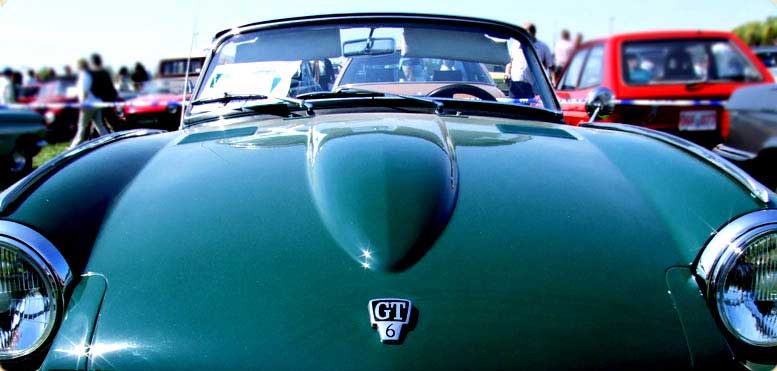
How the GT6 came about
The GT6’s origins are directly connected to the Spitfire’s motorsport programme, which is a more glamorous backstory than most cars can claim. In 1963 Michelotti was commissioned to design a GT version of the Spitfire with a fastback roof, designated the Spitfire GT4. The styling worked beautifully. Unfortunately the 1147cc four cylinder engine was asked to carry the extra weight of a closed body and responded in the manner of a man asked to move a grand piano up three flights of stairs. The project was shelved. The fastback body design was then adapted for the works racing programme, and in 1965 a modified Spitfire wearing a fibreglass version of that fastback finished thirteenth overall and first in class at Le Mans, beating the MG Midgets in the process. Triumph took note, fitted the 1998cc six cylinder engine from the Vitesse, and launched the result in 1966 as the GT6. The Spitfire prefix was quietly dropped to avoid any suggestion this was merely a Spitfire with a roof, which it very much was not.
Which GT6?
The GT6 was produced across three mark variants and the differences between them are significant, particularly regarding the rear suspension. Getting this right is arguably the most important decision in buying a GT6, so pay attention.
Mk1 (1966 to 1968)
The original GT6 used the same swing axle rear suspension carried over from the Spitfire and before that from the Herald saloon. In the Spitfire this arrangement was criticised. In the GT6, with its heavier six cylinder engine up front and considerably more performance available, it was condemned outright by contemporary road testers. The outside rear wheel tucks under during hard cornering in a way that requires quick and accurate reactions to catch, and the car was described by one period review as dangerous. That verdict was perhaps a little theatrical, but not entirely without foundation. Mk1 cars are the rarest and in concours condition the most valuable, but they require respect from the driver and are not recommended for those whose previous classic experience amounts to a Morris Minor and a sunny afternoon. They are wonderful cars in the right hands. Make sure the hands are yours before committing.
Mk2, also called the GT6 Plus (1968 to 1970)
Triumph read the reviews, went rather red in the face, and responded with a significantly revised rear suspension for the Mk2 in 1968. The swing axle was replaced with a proper independent system using rotoflex rubber doughnut couplings on the driveshafts and revised wishbone geometry. The difference in handling was dramatic and widely praised. The Mk2 also received various updates including a revised interior, twin reversing lamps and a more comprehensive instrument pack, because Triumph had apparently noticed that people quite liked knowing how fast they were going.
Mk3 (1970 to 1973)
The Mk3 received the same squared off body restyle that the Spitfire MkIV got in 1970, bringing it into visual line with the Stag and Dolomite as part of a coordinated Triumph family. Whether the restyle improved on Michelotti’s original is one of those arguments that has been running in club car parks since 1971 and will not be resolved here. The rear suspension was revised again to a swing spring arrangement, simpler than the rotoflex and without its specific maintenance requirements. A front anti-roll bar was added. The Mk3 is generally considered the most refined of the three and represents the most sensible all round choice for most buyers.
Rotoflex versus swing axle and swing spring: what it means in practice
This is the question that comes up most often from prospective buyers and its worth explaining clearly, because it genuinely affects which car you should buy and how you should drive it.
Swing axle (Mk1)
The swing axle arrangement means the driveshaft and wheel assembly pivot around a fixed point at the differential. Under hard cornering load the outer wheel can change its angle relative to the road surface, tucking under the car and reducing the contact patch at the worst possible moment. Combined with the weight transfer to the outside rear in cornering, this creates a car that can snap into oversteer with very little warning if pressed hard. Experienced drivers learn to manage it and many Mk1 owners are genuinely devoted to their cars. It does however require smooth inputs and an awareness of the limits that takes time to develop. Think of it as a car that rewards good drivers and occasionally educates overconfident ones.
Rotoflex (Mk2)
The rotoflex system uses rubber doughnut shaped couplings where the driveshaft meets the wheel hub, combined with revised wishbone geometry that keeps the wheel much closer to vertical throughout the suspension travel. The improvement over the Mk1 is substantial and widely acknowledged. It is however worth being honest about this: the rotoflex system reduces the tuck-under tendency rather than eliminating it entirely. The underlying swing axle geometry is still present and the outside rear wheel can still change its angle under extreme cornering load. It just does so much less dramatically than on the Mk1, and at a considerably higher threshold of provocation. For the vast majority of road driving this is entirely academic and the Mk2 is a genuinely confidence inspiring car. Drivers who intend to use a track day to explore the absolute limits should be aware of the characteristic. Everyone else can simply enjoy the car.
The tradeoff with the rotoflex system is that the couplings themselves are a wear item. They crack and deteriorate with age, and failed couplings cause vibration and eventually driveshaft separation, which is exactly as unpleasant as it sounds. Any Mk2 should have its rotoflex couplings carefully inspected before purchase, and budget should be set aside for replacement if they are showing their age. Replacement couplings are available and the job, while requiring the car to be raised and the driveshafts removed, is within the ability of a competent home mechanic with a weekend to spare.
Swing spring (Mk3)
The Mk3 swing spring arrangement mounts the transverse leaf spring on a pivot rather than fixing it rigidly to the body. This eliminates most of the roll stiffness contribution from the rear suspension, greatly reducing the jacking effect that caused the Mk1’s more lively moments. It is a simpler system than the rotoflex and does not have the coupling wear issue. It does not feel quite as polished as the Mk2 at the limit, but for the road driving that comprises ninety-nine percent of most classic owners’ usage, the difference is entirely academic. The Mk3 handles safely, predictably and without drama, which is a quality that becomes more appealing the further you are from your twenties.
In summary: avoid the Mk1 unless you are an experienced driver who specifically wants the earlier body style and understands what you are taking on. The Mk2 is the most satisfying to drive but requires rotoflex inspection and maintenance. The Mk3 is the most practical all round choice for a daily usable classic and will not catch you out.
The engine
The 1998cc inline six is one of the better engines to come out of the Triumph parts bin, which is saying something given the competition. It is smooth, torquey and tractable in a way that the four cylinder Spitfire engine simply is not, and it gives the GT6 a character that is noticeably more relaxed and refined despite the shared bodyshell. The engine was also used in the Vitesse and the TR250, which means there is accumulated knowledge and parts availability across the Triumph community going back decades.
A healthy GT6 engine starts readily, pulls cleanly from low revs and idles smoothly. Listen for any rumble or knock from the bottom end, which indicates bearing wear. A light tapping from the top end that clears once warm is usually tappet clearances needing adjustment, a straightforward job. Blue smoke on the overrun points to valve stem seal or guide wear. White smoke that persists once the engine is properly warm suggests a head gasket issue, which is not uncommon on engines that have overheated at some point during their fifty-plus year life.
Check the temperature gauge carefully during a test drive and watch it in traffic as well as on the move. The GT6 cooling system is adequate but not overengineered, and a thermostat or water pump that is past its best can cause the engine to run warm when sitting still. Overheating is one of the most common causes of head gasket failure on these engines and a car with any history of temperature problems needs careful scrutiny before money changes hands.
Bodywork and structure
The GT6 shares its chassis and most of its body structure with the Spitfire, which means it shares the same enthusiastic approach to rust. The chassis rails, outriggers, sills, floors and wheel arches all need the same careful attention described in our Spitfire buyers guide. Everything said there applies equally here, possibly with added emphasis.
The GT6 specific bodywork to check carefully is the fastback roof structure and the rear hatch. The hatch seal deteriorates with age and allows water into the rear compartment, which then sits quietly on the boot floor doing what water does to steel before eventually working its way into the rear sills and chassis outriggers. Check the rear compartment carpet and floor for any sign of dampness or rust and make sure the hatch seal is actually sealing rather than merely decorative.
The area around the rear screen is also worth a careful look. Water ingress around the screen seal causes rot in the surrounding metalwork that can be difficult and expensive to repair properly. Probe around the edges of the screen aperture with a screwdriver and look for any signs of filler or previous repair work. A GT6 that has had water coming in through the rear screen for any length of time will have rust in places you really do not want rust to be.
The overdrive question
Overdrive was a factory option on the GT6 and is highly desirable on any car used for distance driving. The Laycock de Normanville overdrive operating on third and top gear transforms the GT6 from a car you would approach a motorway journey in with mild apprehension into one that cruises comfortably and economically. Non-overdrive cars are perfectly usable but if you intend to use the car regularly, an overdrive example is worth a meaningful premium. Test it thoroughly on the test drive, checking engagement and disengagement at various speeds. A hesitant or slipping overdrive is often a solenoid or electrical issue rather than a mechanical one, but do not assume that without investigating first.
Living with a GT6
The GT6 is a practical classic by the standards of its era. The fastback body provides more luggage space than the Spitfire, the fixed roof means year round usability without the soft top concerns of a convertible, and the six cylinder engine has a refinement that makes longer journeys genuinely pleasant rather than merely survivable. Its also a car that turns heads in a way that more familiar classics do not, partly because people recognise it without being able to quite place it, and partly because its a genuinely handsome thing that has aged considerably better than most of its contemporaries.
Parts availability is excellent through the TSSC affiliated suppliers, Rimmer Bros and Canley Classics. Almost everything is available new or on exchange, which is a reassuring thing to know about a car of this age. The club network is knowledgeable and genuinely helpful, and there are very few problems with a GT6 that someone in the community has not encountered, solved and written about at considerable length on a forum somewhere.
What to pay
The GT6 remains modestly undervalued compared to the TR series Triumphs, which makes it an interesting proposition at present. Values have been rising steadily but there is still money to be made by buying a good one before the market catches up with what these cars actually are. A solid usable example in average condition typically asks between £7,000 and £12,000. Well restored or particularly good original cars command £14,000 to £20,000 and exceptional examples occasionally exceed that. Mk1 cars in concours condition attract a premium due to rarity. Restoration projects should be priced well below £5,000 to make any financial sense, and even then the total cost of a full restoration will exceed the finished cars market value unless the work is done at home over time.
Before you buy
Join the TSSC before you start looking. The Triumph Sports Six Club covers both the Spitfire and the GT6 and the combined knowledge base is excellent. A Heritage Certificate from the British Motor Museum is strongly recommended for any serious purchase, confirming the original factory specification and whether the car is the colour and specification it claims to be. On a car of this age, surprises are rarely pleasant ones.
Get a pre-purchase inspection from an experienced Triumph specialist if you are not confident assessing the car yourself. The money spent on a proper inspection is trivial against the cost of buying a car with hidden structural problems. Classic car insurance on an agreed value policy is strongly recommended. Get a quote before you commit to buying so there are no surprises, and make sure the agreed value reflects what you have actually paid or what the car is genuinely worth rather than a number that made you feel good at the time.
Before you make an offer, check current market values with our free classic car price checker — estimated UK values by condition grade with live eBay listings alongside, so you can see what cars are actually selling for right now.
This page contains affiliate links. If you click a link and make a purchase, Classic Car Hub may earn a small commission at no extra cost to you.