
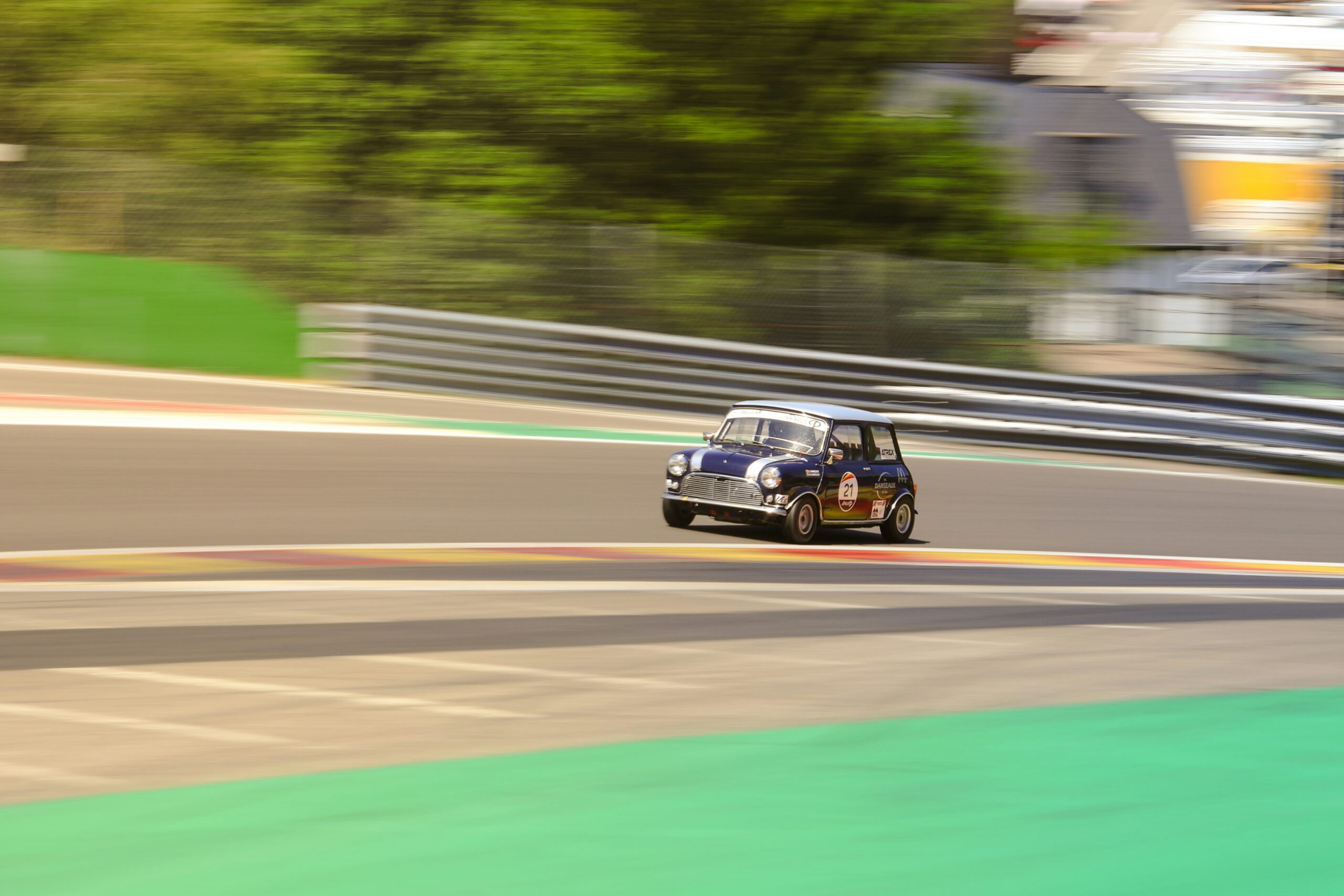
The original Mini is one of the most important cars ever built in Britain. Launched on 26 August 1959, Alec Issigonis’s revolutionary design placed a transverse engine ahead of a front-mounted gearbox in the sump and drove the front wheels, creating a template that every small car manufacturer in the world eventually followed. The result was a ten-foot car that used eighty percent of its floor space for passengers, handled with extraordinary agility, and cost less than most of its rivals.
Over five million were built before the last original Mini left the Longbridge production line on 4 October 2000. Across four decades and an extraordinary range of variants, the Mini won three Monte Carlo Rally victories outright, became a cultural symbol of 1960s Britain, and managed to be simultaneously the transport of choice for students, racing drivers, and members of the Royal Family. It remains one of the most recognisable vehicles ever made.
Today’s buyers are drawn by the Mini’s legendary handling, its compact practicality, its enormous community and parts support, and the remarkable breadth of variants available. From standard saloons to Cooper S performance cars, there is a Mini to suit almost every taste and budget.
Quick Facts
| Detail | Information |
|---|---|
| Years produced | 1959 to 2000 |
| Manufacturer | BMC, British Leyland, Rover Group |
| Body styles | 2-door saloon, estate (Traveller), van, pickup, convertible (Riley Elf/Wolseley Hornet) |
| Engine options | 848cc, 998cc, 1071cc, 1275cc A-Series |
| Power range | Approximately 34bhp to 76bhp (road cars) |
| Transmission | 4-speed manual; automatic option on some variants |
| Drive layout | Front-wheel drive |
| Approx. UK value range | £3,000 to £50,000+ depending on variant and condition |
Specifications
| Specification | Standard 998cc | Cooper S 1275cc |
|---|---|---|
| Engine | 998cc A-Series OHV | 1275cc A-Series OHV |
| Power | Approx. 38bhp | Approx. 76bhp |
| Torque | Approx. 52lb/ft | Approx. 79lb/ft |
| Gearbox | 4-speed manual, gearbox in sump | 4-speed manual, gearbox in sump |
| Suspension | Rubber cone (or Hydrolastic on some variants) | Rubber cone (or Hydrolastic) |
| Brakes | Drum all round (early); disc front on Cooper S | Disc front, drum rear |
| Kerb weight | Approx. 620kg | Approx. 640kg |
| Top speed | Approx. 72mph | Approx. 97mph |
| 0 to 60 mph | Approx. 19 seconds | Approx. 10.9 seconds |
Model Variants
| Variant | Years | Engine | Power | Key Differences | Typical UK Value |
|---|---|---|---|---|---|
| Mini Mk1 | 1959 to 1967 | 848cc or 998cc | 34 to 38bhp | Sliding windows, external door hinges, split windscreen (early) | £6,000 to £18,000 |
| Mini Mk2 | 1967 to 1970 | 998cc or 1098cc | 38 to 48bhp | Wind-up windows, revised grille, larger rear window | £5,000 to £14,000 |
| Mini 1000 (Mk3 onwards) | 1970 to 1992 | 998cc or 1098cc | 38 to 48bhp | Concealed hinges, revised interior | £4,000 to £12,000 |
| Mini Cooper Mk1 | 1961 to 1969 | 997cc or 998cc twin-carb | 55bhp | John Cooper development, twin SUs | £14,000 to £35,000 |
| Mini Cooper S Mk1 | 1963 to 1971 | 1071cc, 970cc or 1275cc | 65 to 76bhp | Disc brakes, Monte Carlo winner | £20,000 to £55,000+ |
| Mini Clubman | 1969 to 1980 | 998cc or 1098cc | 38 to 48bhp | Square nose, longer bonnet | £4,000 to £12,000 |
| Mini Cooper (1990s) | 1990 to 2000 | 1275cc | 63bhp | Modern Cooper revival, well equipped | £5,000 to £14,000 |
For the best value entry point, a solid late-model 1275cc Mini in honest condition offers good performance with strong parts support. The most desirable cars are genuine Mk1 and Mk2 Cooper and Cooper S models with documented Heritage Certificates; these have appreciated significantly and premiums for authenticated examples are substantial. For a beginner classic, a clean 998cc or 1098cc Mk2 or early Mk3 represents the most accessible starting point.
Common Problems
- Sill and floor rust: The Mini rusts comprehensively in the sills and floor pans. Both inner and outer sills must be checked. Floor rot is common where water sits under the carpets from deteriorated door or windscreen seals.
- Subframe corrosion: The front and rear subframes corrode at their mounting points to the bodyshell. Subframe replacement is a significant structural job. Check all four mounting points carefully.
- Rear subframe towers: The pressed steel towers in the boot that the rear subframe mounts to are a critical rust location. Check by pressing firmly. Serious rot here means major structural work.
- A-panel corrosion: The curved A-panels at the base of the windscreen pillar are a notorious rust trap. Replacement is available but fitting correctly is labour-intensive.
- Head gasket failure: The A-series engine shares its oil with the gearbox. Contamination or overheating leads to head gasket failure. Check the oil filler cap for emulsification.
- Gearbox wear: The shared sump means gearbox debris circulates through the engine. Infrequent oil changes accelerate wear. Baulking on second gear is common on higher mileage cars.
- Hydrolastic suspension: Cars built between 1964 and 1971 used Hydrolastic interconnected suspension. A car sitting low at one end has lost pressure. Requires specialist equipment to re-pressurise.
- Fake Cooper badging: Extremely common. A Heritage Certificate from the British Motor Museum is essential before paying any Cooper premium. The number of standard 848cc cars now wearing Cooper badges is not small.
Running and Maintenance
The A-series engine is one of the most thoroughly documented small engines in British motoring history. Any competent mechanic can work on it, and specialist knowledge is widely available through the Mini Owners Club and Mini Cooper Register. Parts availability from suppliers such as Mini Spares Centre and Mini Sport is excellent across almost all variants.
The shared engine and gearbox oil is the most important maintenance consideration. Use the correct specification and change it regularly. Running costs on a well-maintained Mini are genuinely modest.
Vehicles of this age qualify for free historic vehicle road tax, covering the entire original Mini production run from 1959 to 2000.
UK Values
| Condition | Standard Mini | 1990s Cooper | Mk1/Mk2 Cooper | Mk1 Cooper S |
|---|---|---|---|---|
| Project | £1,000 to £2,500 | £2,000 to £4,000 | £5,000 to £10,000 | £8,000 to £16,000 |
| Usable | £3,500 to £7,000 | £5,000 to £9,000 | £12,000 to £22,000 | £20,000 to £35,000 |
| Good | £7,000 to £12,000 | £9,000 to £14,000 | £22,000 to £35,000 | £35,000 to £55,000 |
| Excellent or concours | £12,000 to £20,000 | £14,000 to £22,000 | £35,000+ | £55,000+ |
The Mini market is rising across all variants. Authentic Cooper and Cooper S models have appreciated most sharply. Standard Mk1 and Mk2 cars in original unrestored condition are increasingly sought after. Condition, documented history, and originality are the primary value drivers. Fake Cooper cars have suppressed confidence at the premium end, making Heritage Certificate verification more important than ever.
Buyer’s Tips
- Probe the sills, floor pans, A-panels, and subframe mounting points before anything else. Rust in these areas is structural and expensive.
- Obtain a British Motor Museum Heritage Certificate for any car presented as a Cooper or Cooper S. The certificate confirms the original factory specification and engine.
- Check the oil condition on the shared sump. Milky or heavily contaminated oil indicates a head gasket concern or badly overdue service.
- On Hydrolastic cars (1964 to 1971), check that the car sits level and that neither end has sagged. Re-pressurising requires a specialist.
- Carry a torch and check the rear subframe towers in the boot. Press firmly on the steel and listen for crumbling.
- For a first time buyer, a 998cc or 1098cc Mk2 or late Mk1 in solid structural condition is the most practical starting point.
- Join the Mini Owners Club before buying. Members can advise on specific cars and assist with inspections.
Current Listings and Parts
Use the links below to browse current UK listings, parts and spares for the Classic Mini.
- Browse Classic Mini cars for sale on eBay
- Browse Classic Mini parts and spares on eBay
- Browse Classic Mini restoration parts on eBay
Find More Classic Car Information
Looking for buyers guides, workshop advice, paint codes or restoration tips for your favourite classic? Search the Classic Car Hub below.
Frequently Asked Questions
Is the Classic Mini a good classic car?
Yes. The original Mini is one of the most rewarding and characterful British classics available. Exceptional parts support, enormous community knowledge, and a handling experience that defies its age and size make it a genuinely compelling choice at almost any budget level.
Is the Classic Mini reliable?
The A-series engine is robust and well understood. Reliability depends on the condition of the shared engine and gearbox oil and the regularity of servicing. A well-maintained Mini is straightforward to own. Neglected examples accumulate problems quickly due to the shared lubrication system.
What are the main problems with the Classic Mini?
Rust in the sills, floors, A-panels, and subframe mounting points is the primary structural concern. Fake Cooper badging is widespread. Head gasket failure on poorly maintained engines and Hydrolastic suspension pressure loss on 1964 to 1971 cars are the main mechanical issues.
Are parts easy to find for the Classic Mini?
Parts availability is excellent. Mini Spares Centre, Mini Sport, and numerous other specialists hold comprehensive stocks across all variants. The A-series engine shares components with several other British classics, further widening the supply base.
Is the Classic Mini a good investment?
Values have risen consistently, particularly for Cooper and Cooper S models with documented Heritage Certificates. Standard cars in original unrestored condition are also appreciating. The Mini is unlikely to become less desirable given its cultural status, making clean, original examples a sound long-term hold.
This page contains affiliate links. If you click a link and make a purchase, Classic Car Hub may earn a small commission at no extra cost to you.