
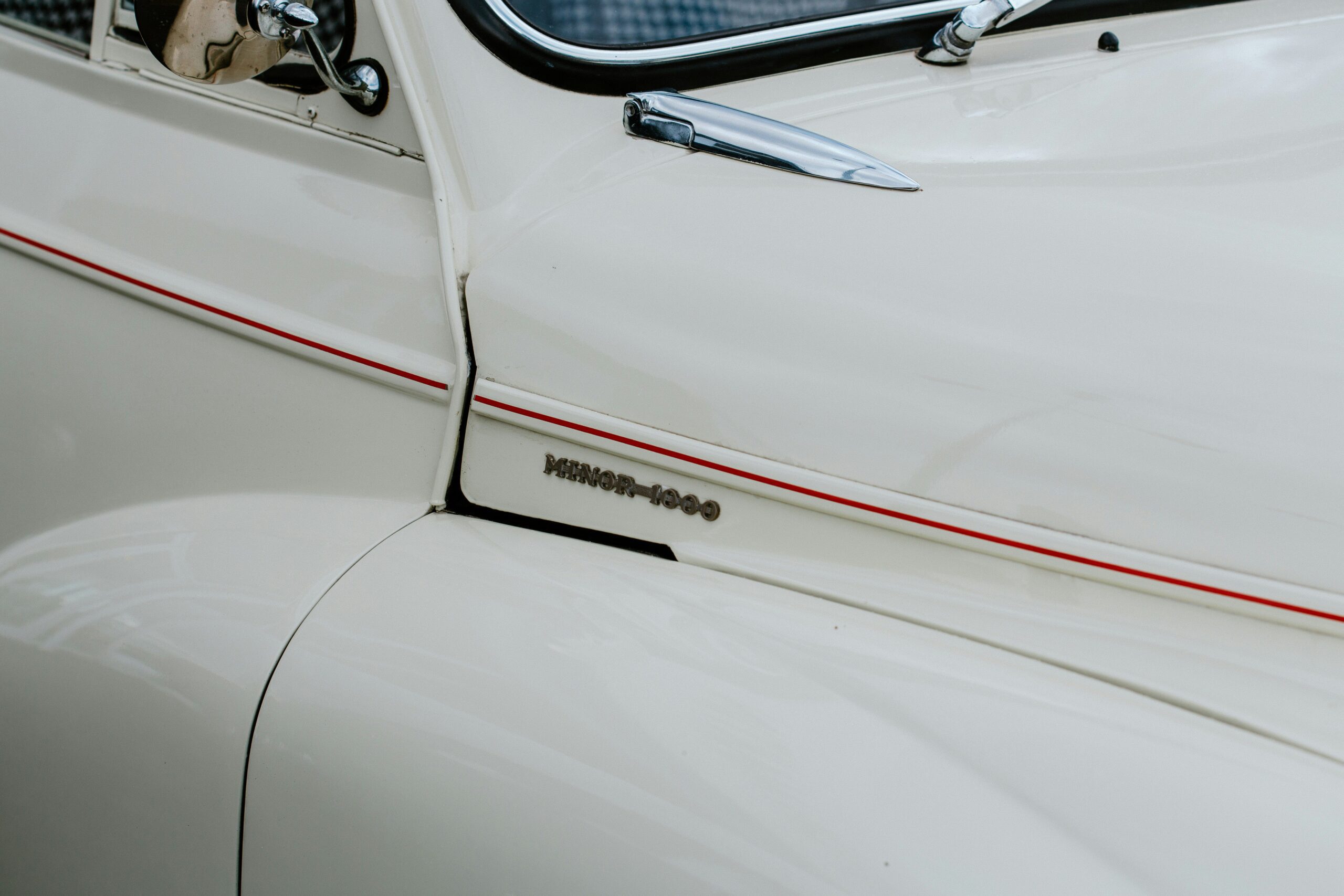
The Morris Minor has been quietly and consistently one of the best first classics available for decades, and it still is. It is also one of the most underrated, which is partly because it has never needed to shout about itself and partly because people who own them tend to be too busy enjoying them to spend much time writing about why everyone else should buy one. This guide attempts to redress that slightly. The Minor is charming, accessible, mechanically simple, beautifully supported by one of the friendliest owner communities in British classic car ownership, and available in four distinct body styles. It is also, in the right hands, significantly more entertaining to drive than its gentle reputation suggests. If you are weighing up your options, our guide to choosing your first British classic covers the Minor alongside four other strong contenders.
A brief history
The Morris Minor was designed by Alec Issigonis, the same man who later produced the Mini, and it shows. The Minor was his first major project for the Nuffield Organisation and it launched at the Earls Court Motor Show in October 1948, where it was received with considerable enthusiasm. Issigonis had wanted to fit a flat-four engine of his own design but was overruled by management, who insisted on the existing 918cc side-valve unit from the Morris Eight. Issigonis was reportedly not best pleased. He got the Mini eventually, which probably helped.
The Minor was produced in its various forms until 1971, a run of twenty-three years that saw over 1.6 million cars built. The millionth Minor was produced in December 1960, making it the first British car to reach that milestone. A batch of 350 were finished in lilac to mark the occasion, which is a detail that says something rather endearing about how the British motor industry celebrated things in 1960.
From 1952 the Minor used the overhead valve A-Series engine from the Austin A30, which transformed the car’s character. The side-valve unit had been acceptable. The A-Series was genuinely good, and it is the engine that defines the Minor for most owners today. The same A-Series engine also powers the Classic Mini and the MG Midget, which means decades of knowledge and parts availability behind it.
Which Minor?
The Morris Minor was offered in four distinct body styles across its production life and each has its own character and following.
Two-door saloon
The most common and most affordable of the four body styles. The two-door saloon is the Minor that most people picture when they hear the name, and it is the best starting point for anyone new to the marque. Good examples are plentiful, parts are universally available, and the simplicity of the body makes structural assessment straightforward. The two-door is also the lightest of the Minor body styles, which makes it the most entertaining to drive. If budget is a constraint or you are buying your first classic, the two-door saloon is where to start.
Four-door saloon
The four-door arrived in 1950 and offers more practical access to the rear seats, which is relevant if the car is going to be used as genuine everyday transport with rear passengers. The body is slightly heavier than the two-door and values are broadly similar. Good four-door examples are less common than two-doors purely because fewer were built, but parts availability is identical.
Convertible tourer
The open Minor is the most sought after and the most expensive. A proper two-seater convertible with a simple folding hood, it was produced from 1948 to 1969 and is now the rarest of the four body styles in good original condition. Values for genuinely sound tourers have been rising steadily and the best examples command a premium that reflects both the rarity and the desirability. The hood condition and hood frame integrity are important checks on any tourer purchase.
Traveller
The Minor Traveller is one of the more distinctive British classics of any era. A half-timbered estate car with a structural ash wood frame forming the rear body, it was produced from 1953 to 1971 and has a devoted following that is entirely justified. The ash frame is structural rather than decorative, which means it requires periodic inspection and maintenance to remain sound. A Traveller with rotten ash is a significant project. A Traveller with sound ash and solid metalwork is one of the most characterful and practical classics available at any price. Check the wood carefully at every joint and where it meets the metal body sections.
Series and specifications
Series MM (1948 to 1952)
The earliest Minors use the 918cc side-valve engine and are identifiable by the split windscreen and the narrow headlamps mounted low on the bodywork. These are the rarest and the most characterful of all Minors, with a period charm that the later cars cannot quite replicate. The side-valve engine is less willing than the later A-Series unit but entirely adequate for gentle use. Genuine Series MM cars in good original condition are becoming scarce and values reflect this.
Series II (1952 to 1956)
The A-Series overhead valve engine arrived with the Series II, transforming the Minor’s performance and refinement at a stroke. The 803cc unit was replaced by the 948cc engine in 1956. The Series II also received the wider headlamps moved to the tops of the front wings, giving the car its familiar face. These are the first Minors that most enthusiasts would describe as genuinely good to drive.
Minor 1000 (1956 to 1971)
The Minor 1000 is the version most buyers encounter. The 948cc engine was enlarged to 1098cc in 1962, giving the car a useful step up in performance that makes it significantly more comfortable on modern roads. The 1098cc Minor 1000 is the most practical and usable of all the Minor variants for everyday driving and represents the best starting point for most first-time buyers. A one-piece windscreen replaced the split screen from 1956. Winding windows replaced the original sliding type during the 1000’s production run.
What to look for: bodywork and structure
The Minor is a monocoque construction from the Series II onwards, which means the body and the structure are the same thing. Rust in structural areas is an engineering problem rather than a cosmetic one, and the Minor is enthusiastic about rust in ways that require thorough inspection.
Sills
The sills are structural and the most critical thing to inspect on any Minor. Both the outer and inner sill structure must be sound. Probe firmly at the lower edges and at both ends where the sill meets the front and rear wings. Outer sills replaced over rotten inners are common and dangerous. A hollow sound when tapping indicates either filler or rot behind the outer skin. If in doubt, look from underneath.
Floor pans
Lift every mat and carpet and inspect the floor directly. Water ingress from deteriorated door seals and windscreen seals sits on the floor and rots it from above. Replacement floor sections are available but fitting them properly is a structural repair that needs doing correctly. Check under the driver’s footwell particularly carefully as this area takes the most water from a leaking windscreen seal.
Front wings and inner wings
The Minor’s front wings bolt on rather than being welded, which is useful for replacement but also means rust accumulates where the wing meets the body behind the headlamp. The inner wings rot at the base and around the suspension mounting points. Probe these areas carefully. A structurally compromised inner wing is a serious repair on any monocoque car.
Rear wheel arches and boot floor
The rear wheel arches rot at their lower edges and where they meet the sill. The boot floor corrodes around the spare wheel well. On tourers, the rear body tub is a specific rust area where the soft top mechanism meets the bodywork. On Travellers, inspect every joint where the ash frame meets the metal body sections, as water traps here and the resulting rot can be in either the wood or the metal or both.
What to look for: mechanicals
The A-Series engine
The A-Series engine in the Morris Minor is one of the most robust and well-understood small engines in British motoring history. It shares its basic architecture with the Mini and MG Midget engines, which means there are decades of knowledge and parts availability behind it. A healthy engine starts readily, idles evenly, and pulls without hesitation. Listen for any knocking from the bottom end on a warm engine at idle, watch for blue smoke on the overrun indicating valve stem wear, and check for white smoke once the engine is fully warm which suggests a head gasket.
Oil leaks from the rocker cover and timing chest are common on older examples and should be expected rather than treated as a reason to walk away, unless they are severe enough to suggest the engine has been neglected. Our pre-season safety check guide covers the full engine inspection routine in detail.
Gearbox
The Minor gearbox should change cleanly through all four gears without baulking or jumping out on the overrun. Second gear synchromesh is the most common wear point. The gear lever on the Minor is mounted on the floor and the linkage can become sloppy with age, producing vague changes that are more an irritant than a fault. Check the gearbox for any significant leaks from the rear seal.
Suspension and steering
The Minor uses torsion bar front suspension with a rack and pinion steering rack, the latter being one of Issigonis’s more elegant solutions and the reason the car feels so direct and responsive to drive. Check the rack for any play by rocking the steering wheel with the front wheels straight. Any significant free play before the front wheels respond indicates rack wear. The front trunnions need regular greasing and neglected trunnions wear rapidly, producing imprecise steering and clonking over bumps. Ask about the maintenance history of the front suspension before buying any Minor.
The Traveller’s ash frame
The Traveller deserves specific mention on the ash frame question because it is the single most important thing to check on any Traveller purchase and the thing most easily missed by an inexperienced buyer. The ash frame is structural. It is not trim. If the frame is rotten the car is not roadworthy regardless of how the metal bodywork looks.
Inspect every joint in the frame closely, particularly the lower joints where the ash meets the metal body sections and where water can sit. Sound ash is pale, firm, and shows no soft spots under hand pressure. Rotten ash is darker, soft, and may crumble under pressure. The joints should be tight and well fitted. Any movement at a joint indicates that the frame has either shrunk or deteriorated. A Traveller with a sound ash frame is worth considerably more than one that needs re-framing, and the work to re-frame a Traveller properly is a significant undertaking best done by a specialist.
What to pay
The Morris Minor remains one of the most accessible classics at any condition level. A solid, usable two-door or four-door saloon in average condition asks between £4,000 and £8,000. Well-restored examples command £9,000 to £14,000. Tourers in good condition start around £8,000 and the best examples reach £16,000 to £20,000. Travellers in good condition with sound ash are £8,000 to £15,000. Restoration projects should be below £3,000 for saloons and below £4,000 for Travellers, reflecting the additional work the ash frame represents.
Before you buy
The Morris Minor Owners Club is one of the most active and practically helpful single-marque clubs in Britain. Members are knowledgeable, approachable, and the club’s technical resources cover every aspect of owning and maintaining a Minor in considerable detail. Joining before you start looking is strongly recommended and the club can often put you in touch with local members who can accompany you to inspect a specific car.
Classic car insurance on an agreed value policy from a specialist insurer is recommended, and every Morris Minor on the road today qualifies for historic vehicle road tax exemption. Running costs are genuinely modest. Parts availability from the Morris Minor Owners Club spares operation and from dedicated suppliers is excellent across all body styles and most mechanical components.
The Morris Minor asks relatively little and gives a great deal back. It is honest, charming, and reliable in the way that only a simple, well-understood car with a large and knowledgeable community behind it can be. If you want to learn classic car ownership without being overwhelmed by it, there is no better place to start. For more options at a similar price point, our Triumph Herald and Vitesse buyers guide covers another excellent first classic with similarly accessible engineering.
Before you make an offer, check current market values with our free classic car price checker — estimated UK values by condition grade with live eBay listings alongside, so you can see what cars are actually selling for right now.
This page contains affiliate links. If you click a link and make a purchase, Classic Car Hub may earn a small commission at no extra cost to you.