
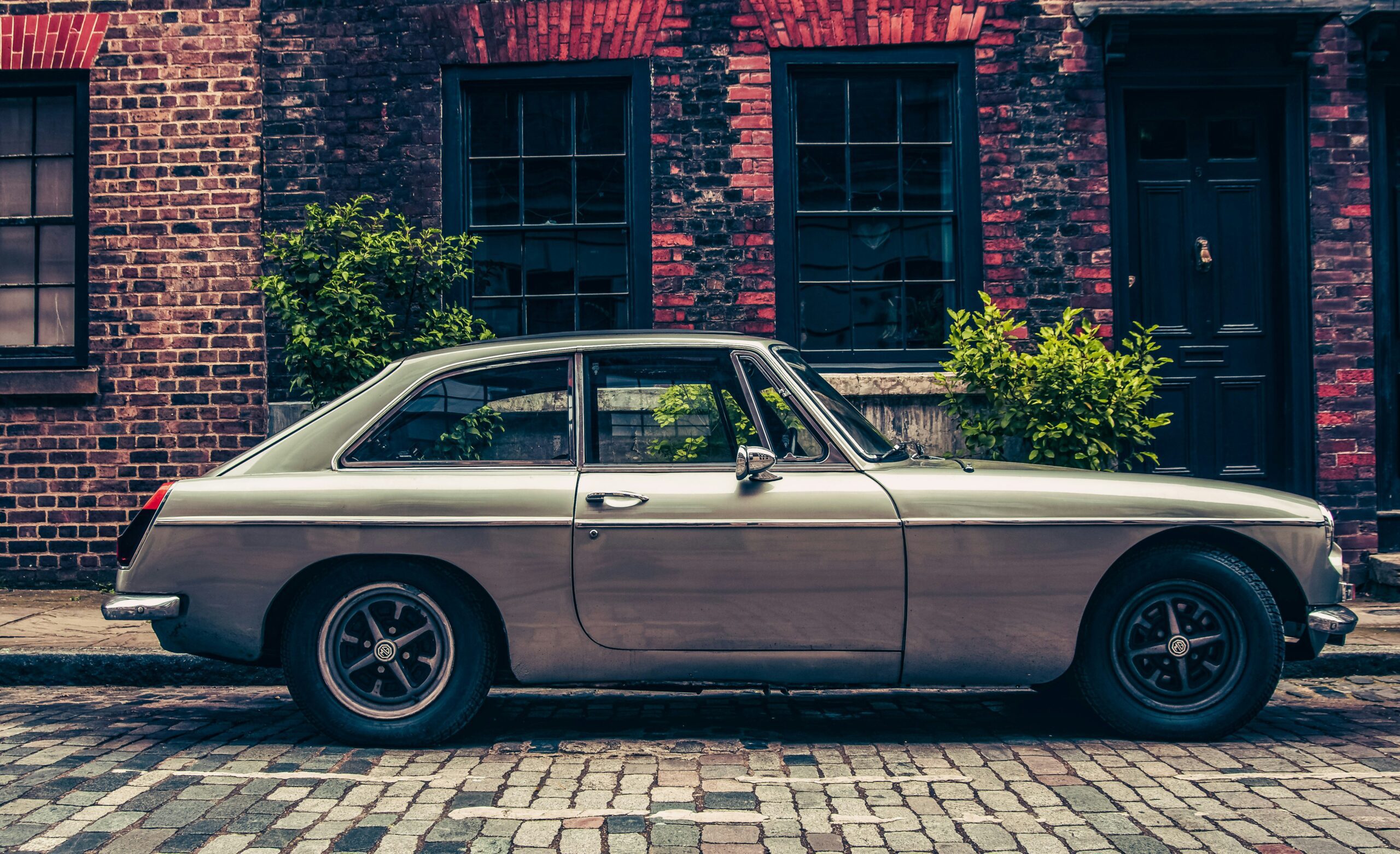
The MGB is the car that defined affordable British sports car ownership for a generation and continues to define it today. Over half a million were built between 1962 and 1980, which is a number that puts it in a completely different league from every other British sports car of the era. The E-Type sold fewer than 73,000. The Triumph TR6 managed around 94,000. The MGB simply outsold everything and did so by being genuinely good at everything it attempted: attractive, practical, robust, affordable to buy, easy to maintain, and enjoyable to drive. Fifty years on, the parts supply remains exceptional, the community is enormous, and good examples are still accessible at prices that do not require a second mortgage. If you are looking for a first classic or a usable everyday sports car, the MGB deserves serious consideration. This guide will help you buy the right one.
A brief history
The MGB was announced at the Earls Court Motor Show in October 1962, replacing the separate-chassis MGA with a proper monocoque body that was stiffer, more spacious, and more modern in every respect. The 1798cc B-Series engine carried over from the MGA but in revised form, and the new bodyshell gave the car a more comfortable interior and a proper boot. It was, in short, a better car in every practical sense than the car it replaced, and the public received it accordingly. For the full story of MG and the Abingdon factory that built every MGB ever made, our dedicated history articles cover both in detail.
The MGB GT fastback arrived in 1965, a closed coupe version that Autocar of the time described as one of the most practical sports cars in the world. It offered genuine everyday usability with the rear hatch and occasional rear seats, and many owners regard it as the more interesting car of the two bodystyles. In 1969 HRH Prince Charles took delivery of an MGC GT, registration SGY 766F, which was later passed to Prince William. It is probably the most well-connected MG ever built, which is not relevant to buying advice but is a genuinely good piece of trivia.
From 1974 American safety legislation forced the adoption of large black polyurethane bumpers and a raised ride height that did nothing for the car’s appearance or its handling. These rubber bumper cars are often dismissed by purists but are cheaper to buy and mechanically identical to their chrome bumper predecessors. The last MGB came off the Abingdon production line on 23 October 1980. It was presented to Henry Ford II, who placed it alongside his father Edsel’s 1930 M-Type Midget in the Ford museum. The symmetry is either poetic or ironic depending on your disposition.
Which MGB?
MGB Roadster chrome bumper (1962 to 1974)
The original and, for most buyers, the most desirable. The clean lines, chrome bumpers and overriders, and the lower ride height give the chrome bumper car a purposeful elegance that the later rubber bumper cars cannot quite match. The 1962 to 1967 cars have a three-bearing crankshaft, which was replaced by the more durable five-bearing unit from October 1964 onwards. If you are looking at a very early car, check the commission number carefully and establish which crankshaft it has. The five-bearing unit is considerably more robust at higher mileages and is much preferred.
MGB Roadster rubber bumper (1974 to 1980)
The unloved younger sibling that is increasingly gaining its own following. Mechanically sound and often better equipped than equivalent chrome bumper cars, the rubber bumper Roadster suffers primarily from aesthetics rather than from any actual deficiency. The raised ride height can be corrected by fitting lowering blocks, and chrome bumper conversion is widely done and well understood. A solid rubber bumper car at the right price represents genuinely good value. Do not dismiss them out of hand.
MGB GT (1965 to 1980)
The GT is the practical choice, offering a proper hatchback, occasional rear seats, and year-round usability without the soft top concerns of the Roadster. Many owners prefer the GT’s Pininfarina-influenced roofline to the roadster’s profile and there is nothing wrong with that judgement. The GT was not offered in V8 specification in rubber bumper form, as British Leyland discontinued the V8 before the rubber bumper era reached the GT. Chrome bumper GTs are consistently slightly undervalued relative to equivalent Roadsters, which makes them interesting from a purchasing perspective.
[ebay_placement]
MGC (1967 to 1969)
Fewer than 9,000 MGCs were built in total, making them rare by MGB standards. The six cylinder engine requires specific parts that are less universally available than the B-Series items, and the front end weight distribution means the handling requires more familiarity than a standard MGB. Get a Heritage Certificate for any MGC purchase and verify the engine number carefully, as MGC engine swaps are not unknown. A properly maintained MGC is a characterful and rapid car. A poorly maintained one is a more complex project than a standard MGB.
MGB GT V8 (1973 to 1976)
Only 2,591 MGB GT V8s were built, all in GT bodystyle only, all with chrome bumpers. The Rover V8 engine is supremely refined and produces a sound entirely at odds with the car’s modest exterior. Genuine V8 cars are well documented and verifiable but command a significant premium. The conversion of standard MGBs to V8 specification is extremely common and some are very well done. A conversion is not a factory V8 and should not be priced as one, but a properly engineered conversion on a solid bodyshell is a fine thing in its own right. Establish which you are looking at before agreeing a price.
What to look for: bodywork and structure
The MGB’s monocoque construction means the body and the structure are the same thing, which has implications for how you assess a car and how you budget for repairs. Rust in structural areas is not a cosmetic problem. It is a structural one.
Sills
The sills are structural on the MGB and the most common location for serious rust. Both the outer sill and the inner sill structure must be sound. Tap along the sill with your knuckle. A solid sill sounds different from a hollow or filler-packed one. Probe with a screwdriver at the lower edges and at the rear quarter where the sill meets the rear wing. Outer sills fitted over rotten inners are extremely common and render the car structurally compromised regardless of how good the outer surface looks. If in doubt, look under the car at the inner sill from below.
Floor pans and footwells
Lift the carpets and mats and inspect the floor pans directly. Water gets in through deteriorated door seals, through the windscreen seal, and through the hood on Roadsters, and sits on the floor where it quietly rots the metal from above. Tapping the floor with a screwdriver handle reveals thin or holed metal immediately. Replacement floor panels are available and not prohibitively expensive, but fitting them properly is a job that needs doing right.
Front inner wings and suspension towers
The front inner wings and the suspension turrets are critical structural areas that require careful inspection. Rot here is expensive to repair and compromises the structural integrity of the front end. Look for any signs of previous repair work, fresh underseal applied in suspicious quantities, or evidence of welding. The area where the inner wing meets the bulkhead is a specific rust location on higher mileage cars.
Rear valance and boot floor
The rear valance rots at its lower edge. The boot floor corrodes particularly around the spare wheel well and the battery tray on cars where batteries have leaked. The area behind the rear wheels inside the wheel arch collects mud and holds moisture against the metal. Inspect all of this carefully and probe any suspicious areas firmly.
Doors and soft top on Roadsters
Door bottoms rust from the inside out. Tap along the lower edge of each door and look for any bubbling under the paint or surface rust at the drain holes. A door that feels heavy and solid is in better condition than one that flexes noticeably when you close it. On Roadsters, inspect the soft top frame carefully for broken or bent bows, and check the hood material for tears and crazing in the rear window. A new hood is available at reasonable cost but fitting it properly requires care if it is to seal correctly at the windscreen rail and rear quarters.
What to look for: engine and mechanicals
The B-Series engine
The 1798cc B-Series is one of the most robust and well-understood engines in British classic car history. It should start readily when warm, idle evenly, and pull cleanly without hesitation. Check the oil level and condition before starting. Oil that looks milky indicates water contamination. Oil that is very dark and sludgy suggests infrequent changes. Either is a concern. Once running, listen for any knocking from the bottom end, which indicates bearing wear, and watch the temperature gauge during the test drive. Blue smoke on the overrun indicates worn valve stem seals. White smoke that continues once the engine is fully warm suggests a head gasket.
The B-Series is prone to oil leaks from the rocker cover and the rear crankshaft seal. Some seepage from the rear seal is almost universal on older engines and should be expected. A significant drip from the rear seal indicates a seal that needs replacing, which is a more involved job on the B-Series than on most modern engines as it requires gearbox removal. Budget for it rather than being surprised by it.
Gearbox and overdrive
The four speed gearbox is generally reliable. Check for baulking on second gear and any tendency to jump out of gear on the overrun. Overdrive was a factory option and is well worth having for comfortable modern road use. The Laycock overdrive operates on third and fourth gears and transforms the car on longer journeys. Test it at speed by switching in and out and checking it engages cleanly without slip or judder. A non-functioning overdrive is often an electrical or solenoid fault rather than a mechanical one, but establish the cause before assuming it is a simple fix.
Rear axle
The rear axle should be quiet in all conditions. Any whine that increases with road speed indicates worn differential or axle bearings. A clonk on taking up drive or trailing the throttle indicates worn universal joints or differential wear. Neither is a catastrophic failure but both represent work that needs doing and should be factored into the purchase price.
Brakes and suspension
The MGB uses front disc brakes and rear drums throughout the production run. The brakes should pull evenly and stop the car in a straight line. Any pulling to one side indicates a seized caliper or wheel cylinder. Check the brake fluid condition and level and look at the flexible brake hoses for any signs of cracking or swelling, both of which indicate hoses that needs replacing. The rubber suspension bushes deteriorate with age and worn bushes produce vague, imprecise steering and handling. Replacement polyurethane bushes are available and are a worthwhile upgrade on any car where the original bushes are showing their age.
Paint codes and colours
One of the first questions on any MGB purchase is whether the car is in its original colour. MG did not stamp paint codes on the commission plate of production cars until the 1980 model year, which means there is no code on the car itself for the vast majority of MGBs. A Heritage Certificate from the British Motor Museum at Gaydon is the only definitive way to confirm the original factory colour. For reference on what colours were offered in which years, our MG paint colour codes guide covers the full range of MGB colours from 1962 to 1980 with colour swatches for every shade.
Heritage Certificates
A Heritage Certificate from the British Motor Museum confirms the original factory specification of any MG built at Abingdon, including the original colour, trim colour, engine number, and any factory-fitted options. The cost is modest and the certificate is worth having on any serious purchase. It confirms whether the car is the colour it claims to be, whether the engine number matches the original, and whether any factory options listed by the seller were actually specified. For MGC and MGB GT V8 purchases, where authenticity commands a premium, the Heritage Certificate is essential rather than optional.
Common problems summary
- Sill rust is the most critical structural issue and the most commonly disguised — probe thoroughly and look from underneath
- Floor pan rot from water ingress through the windscreen seal, door seals and soft top on Roadsters
- Front inner wing and suspension turret rust is expensive to repair properly
- Rear crankshaft oil seal leaks are almost universal and require gearbox removal to fix properly
- Head gasket failure on engines that have overheated or been poorly maintained
- Three-bearing crankshaft wear on pre-October 1964 cars at higher mileages
- Overdrive electrical faults are common and often straightforward but verify before assuming
- Soft top frame damage and hood condition on Roadsters
- GT rear hatch seal deterioration allows water into the boot and eventually the bodywork
- V8 conversion cars presented as factory V8s — always verify with Heritage Certificate
What to pay
The MGB market has two very clear tiers. Chrome bumper cars command a premium over rubber bumper examples across all conditions. A solid, usable chrome bumper Roadster in average condition asks between £8,000 and £14,000. Well-restored or particularly good original chrome bumper cars command £15,000 to £22,000. The best concours-quality chrome bumper Roadsters exceed £25,000. Rubber bumper Roadsters in usable condition start around £5,000 to £8,000 with very good examples at £10,000 to £14,000. Chrome bumper GTs are consistently undervalued relative to equivalent Roadsters and represent good buying at £7,000 to £14,000 for good examples. MGC models in good condition ask £15,000 to £25,000. Factory MGB GT V8 cars start at around £20,000 and the best examples considerably exceed that.
Before you buy
The MG Owners Club and the MG Car Club are both large, active organisations with extensive technical resources and a network of local members who can often assist with pre-purchase inspections. Both publish detailed technical guides on what to look for when buying and both have dating services that can verify a car’s history against factory records. Joining before you start looking is strongly recommended.
Get a Heritage Certificate for any car where the colour, specification, or engine number matters to the price being asked. The cost is modest against the price of the car and the alternative, discovering the car is not what it was represented as after the money has changed hands, is considerably less pleasant. Classic car insurance on an agreed value policy from a specialist insurer is strongly recommended. The MGB is well-catered for by the specialist insurance market and premiums are competitive, particularly on limited mileage policies for cars used primarily at weekends and on summer runs.
If the MGB has caught your attention but you are also considering something smaller, our MG Midget buyers guide covers the Midget in the same detail. If you are undecided between MG and Triumph, our Triumph Spitfire buyers guide and guide to choosing your first British classic are good places to start the comparison. And for the full story of the factory that built every MGB ever made, the history of Abingdon is worth an hour of your time.
The MGB is the most approachable, most supported and most practical classic British sports car available. It does not have the sporting pedigree of a Ferrari or the cachet of an E-Type. What it has instead is an honest, endearing character that rewards the effort you put into it, costs relatively little to maintain, and goes around corners in a manner that will remind you why driving was once considered a pleasure rather than a commute. Over half a million people bought one new. It is reasonable to conclude they were onto something.
Before you make an offer, check current market values with our free classic car price checker — estimated UK values by condition grade with live eBay listings alongside, so you can see what cars are actually selling for right now.
This page contains affiliate links. If you click a link and make a purchase, Classic Car Hub may earn a small commission at no extra cost to you.